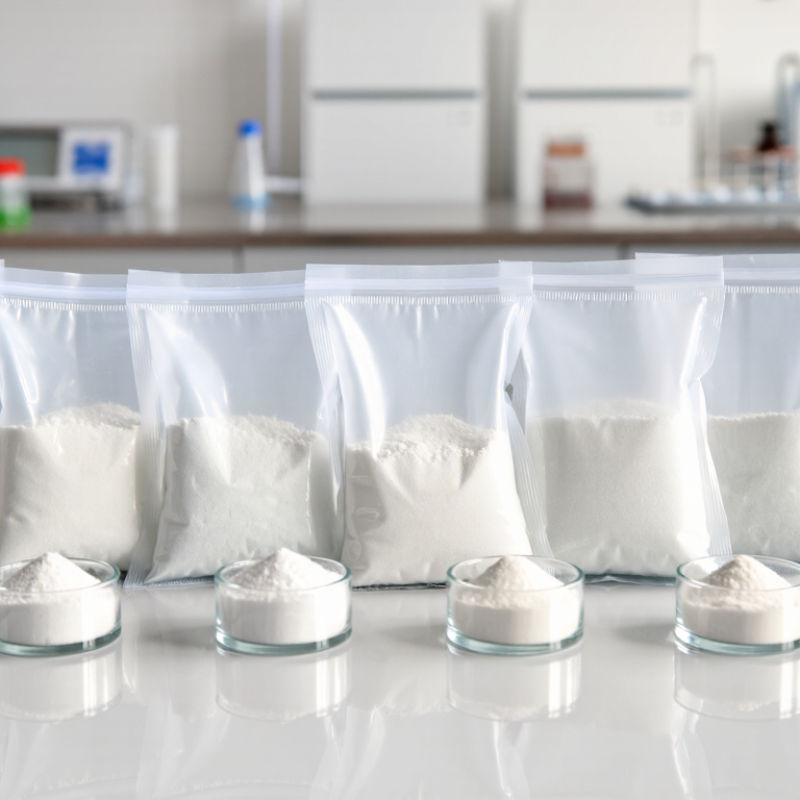
Choosing a supplier for Bulk Erythritol Powder is not just a price comparison. Buyers need to assess product specifications, lot consistency, documentation, and the supplier’s ability to ship reliably. A fine white powder may look identical in two sample bags, yet differ in particle size, flow, or performance in a beverage mix. Small details matter.
Food scientist Dr. Kantha Shelke is known for her work on food ingredients and processing. The following is an editorial paraphrase of an ingredient-focused sourcing principle, not a verbatim quotation: “Judge an ingredient by its performance, quality evidence, and fit for the finished product.” That lens helps buyers ask better questions. Can the supplier provide a current specification sheet and representative batch documents? Are packaging options suitable for the order size and storage plan? How are quality concerns handled? Clear answers are more useful than broad promises.
This guide compares seven suppliers serving global buyers, with attention to product information, commercial readiness, and practical sourcing considerations. Availability, lead times, and export support can change, so confirm details directly before placing an order. A supplier’s website is a starting point, not a full audit. Samples also have limits. They show one product instance, not every future lot. Careful buyers compare evidence and keep records. There is no perfect supplier for every application. The best fit depends on your formulation, target market, order volume, and tolerance for supply risk.
Erythritol powder is a four-carbon sugar alcohol with the formula C₄H₁₀O₄ and a molar mass of 122.12 g/mol. Its food additive identifier is INS 968. These details help buyers compare technical documents across bulk suppliers. But the chemical identity alone does not predict how a powder performs. Moisture, particle size, and assay can affect flow, blending, and batch consistency. Small details matter.
The FAO/WHO Joint Expert Committee on Food Additives (JECFA) identifies erythritol as INS 968 in its additive specifications. EFSA’s 2015 re-evaluation, published in EFSA Journal 13(3):4033, established an acceptable daily intake of 0.5 g per kilogram of body weight per day, based on assessment of laxative effects. This assessment is not a serving recommendation. Global buyers should check applicable market requirements and request current, batch-specific documentation.
Tips: Ask for a certificate of analysis showing assay, moisture, and particle-size distribution. Confirm that the product documents state the formula and INS number. I would not rely on “food grade” alone; that label may not explain whether the powder’s granulation suits a particular production line.
Erythritol is a sugar alcohol used as a food ingredient. Its molecular formula is C₄H₁₀O₄, its molar mass is 122.12 g/mol, and its Codex International Numbering System (INS) number is 968. The comparison below covers supplier types and sourcing channels, not named or ranked companies.
| Supplier Type | Typical Role | Potential Advantage for Bulk Buyers | Key Checks Before Ordering | Best Fit |
|---|---|---|---|---|
| 1. Erythritol producer | Manufactures erythritol and may offer food-grade powder directly. | Direct access to product specifications and production quality documentation. | Confirm food-grade status, specification limits, lot traceability, available packaging, lead time, and export documents. | Buyers seeking a direct manufacturing relationship or recurring volume supply. |
| 2. Specialty polyol manufacturer | Produces polyols and may include erythritol in its ingredient portfolio. | May support technical discussions about formulation, handling, and ingredient applications. | Verify that erythritol powder is currently offered and request its product-specific specification and allergen statement. | Food manufacturers evaluating erythritol alongside other polyols. |
| 3. Food-ingredient distributor | Sources ingredients from producers and resells them to food businesses. | Can provide local inventory, consolidated purchasing, or access to smaller order quantities, depending on the distributor. | Check the supplying manufacturer, country of origin, lot documentation, storage conditions, and minimum order quantity. | Buyers prioritizing local availability and a single point of contact. |
| 4. Regional ingredient importer | Imports food ingredients and sells them within a defined market or region. | May be familiar with local customs procedures, import requirements, and regional delivery options. | Confirm importer-of-record arrangements, applicable food regulations, product origin, and required local-language documents. | International buyers who need regional logistics or import support. |
| 5. Contract packer or repacker | Packages or repackages bulk ingredient into formats requested by a buyer. | Can offer packaging and labeling services where the facility and order terms permit. | Establish who manufactures the ingredient, packaging specifications, food-safety controls, traceability, and label responsibility. | Buyers needing customized packaging or a packing service in addition to ingredient supply. |
| 6. Bulk-ingredient exporter | Coordinates cross-border sales and shipment of bulk ingredients; may be a producer or a trading intermediary. | May coordinate export paperwork and freight arrangements for overseas orders. | Identify the actual manufacturer, agree on Incoterms, verify shipping documents, and confirm payment and inspection terms. | Buyers sourcing internationally who can manage or negotiate import logistics. |
| 7. B2B sourcing platform | Connects buyers with listed sellers; the platform may not manufacture or hold the product. | Useful for comparing offers and contacting multiple potential suppliers. | Independently verify seller identity, manufacturing source, samples, specifications, certificates, and transaction protections. | Buyers exploring the market before qualifying a supplier directly. |
Before purchase, request a current product specification and certificate of analysis for the relevant lot. Confirm food-use compliance, grade, packaging, shelf life, origin, traceability, and destination-market requirements with the seller.
It is a four-carbon sugar alcohol with formula C₄H₁₀O₄ and molar mass 122.12 g/mol. Its food additive identifier is INS 968.
Request a batch-specific certificate of analysis showing assay, moisture, and particle-size distribution. Confirm that product documents state the formula and INS number. “Food grade” alone may not describe suitable granulation.
Compare verified annual capacity, monthly availability, minimum order, and lead time. Request matching information from every supplier. A large capacity figure can be misleading.
Check the certificate’s scope, issuing body, facility, and expiry date. Make sure it covers the product and production site. Small details matter.
Confirm net weight, bags per pallet, pallet dimensions, and shipment weight. Ask whether each bag has a sealed inner liner. Check for repacking or sample fees.
Separate production, document preparation, and transport time. Ask for a recent timeline on your route and clarify the dispatch date. Port benchmarks are not delivery promises.
Include product, palletization, freight, insurance, duties, and destination handling. Request a dated freight quote and identify variable charges. Demurrage can erase a low unit price.
No. EFSA’s 2015 assessment set an acceptable daily intake of 0.5 g per kilogram of body weight per day, based on laxative effects. It is not a serving recommendation.
Review particle size, moisture, assay, and sample appearance before ranking suppliers. Test a sample when possible. I would not rely on a neat spreadsheet alone.
Bulk Erythritol Powder is a sugar alcohol with the molecular formula C₄H₁₀O₄ and a molecular weight of 122.12 g/mol. Identified as INS 968, it provides roughly 60–70% of sucrose’s sweetness and about 0.2 kcal per gram. For food applications, buyers should confirm that a product’s grade, documentation, and intended use align with applicable FDA requirements, EU E 968 standards, and JECFA guidance for INS 968.
Choosing a supplier involves more than comparing price. Assess production capacity, quality certifications, export experience, and the ability to provide consistent specifications. Also compare practical purchasing details, including standard 25-kg packaging, minimum order quantities, lead times, shipping arrangements, and total delivered cost. A careful evaluation of these factors can help global buyers identify a dependable supply option that fits their quality needs, order volume, and delivery schedule.