
Organic Raw Cane Sugar Bulk Procurement: Technical Benchmarks, Global Supply Dynamics & Clean-Label Strategy
An exhaustive procurement roadmap for commercial food processors, beverage manufacturers, craft distillers, and industrial bakeries seeking certified USDA Organic Raw Cane Sugar. Backed by four decades of ingredient distribution, guaranteed COA parameters, and nationwide 50-state logistics resilience.
Redefining Commercial Sweetness: The Science & Economics of Organic Raw Cane Sugar
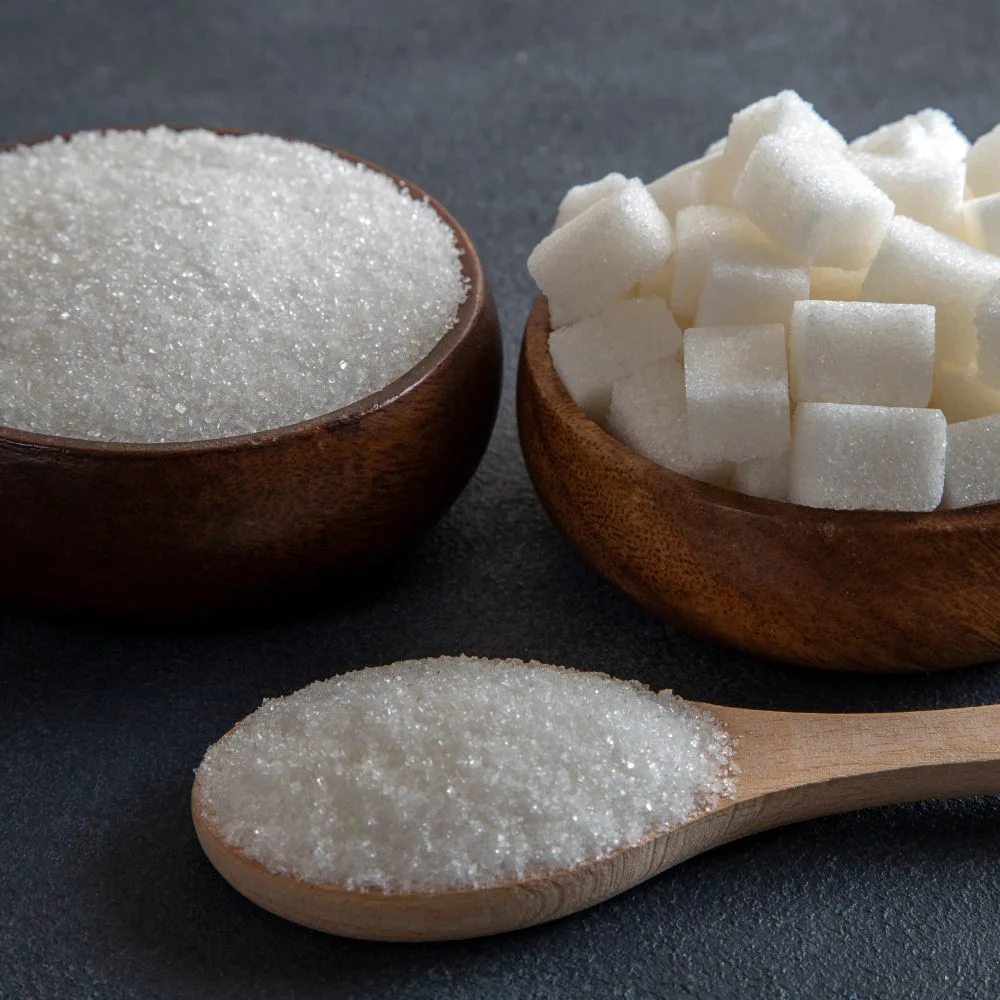
In the modern food manufacturing architecture, consumer demand for non-ultra-processed ingredients has transformed Organic Raw Cane Sugar from a niche natural product into a critical enterprise commodity. Unlike refined white granulated sugar—which undergoes intensive sulfur dioxide bleaching, carbon filtration, or bone char decolorization—organic raw cane sugar preserves the natural molasses layer surrounding the sucrose crystal.
For procurement executives, research chefs, and quality assurance directors, transition to raw organic cane sugar involves far more than updating front-of-pack claims. It alters formulation physics: modifying Maillard browning dynamics, adjusting moisture equilibrium, enhancing aromatic depth, and securing premium price elasticity in retail and food service channels.
At US Sweeteners, operating since 1987, we bridge the gap between global sugar mills and domestic manufacturing floors. We provide transparent technical specifications, multi-origin security, and rigorous analytical verification so your operational integrity remains uncompromised.
Technical Specification Standards for Industrial Procurement
Every lot of Organic Raw Cane Sugar distributed by US Sweeteners is validated against strict chemical, physical, and microbiological benchmarks. Below are our baseline CoA guarantees for standard commercial grades.
| Technical Parameter | Standard Specification | Testing Methodology | Commercial Significance |
|---|---|---|---|
| Polarity (°Z) | Min 99.0° Z to 99.5° Z | ICUMSA GS1/2/3/9-1 | Ensures high sucrose purity and consistent sweetness yield per batch. |
| ICUMSA Color | 600 – 1500 IU (Golden Raw) / 1500–3500 (Demerara) | ICUMSA Method GS2/3-9 | Defines visual golden tone and subtle molasses flavor impact. |
| Moisture Content | Max 0.10% – 0.15% | ICUMSA GS2/1/3-15 | Critical for preventing caking, clumping, and microbial growth in silos. |
| Conductivity Ash | Max 0.15% - 0.25% | ICUMSA GS2/3-17 | Measures residual organic mineral content (calcium, magnesium, potassium). |
| Invert Sugar Content | Max 0.10% – 0.20% | ICUMSA GS1/3-7 | Controls hygroscopicity and reduces unwanted premature dough softening. |
| Sulfur Dioxide (SO2) | Undetectable (< 10 ppm) | Titrametric / ICUMSA | Guarantees 100% chemical-free organic processing. |
| Total Plate Count (TPC) | < 1,000 CFU/g | US FDA BAM / AOAC | Ensures strict compliance for sensitive beverage and dairy processing. |
| Yeast & Mold | < 100 CFU/g | US FDA BAM / AOAC | Protects product shelf life in dry mix and bakery formulations. |
Deconstructing the Agronomic & Milling Process
The journey of premium organic raw cane sugar begins in non-fumigated, non-chemically fertilized sugarcane plantations. Sugarcane (*Saccharum officinarum*) is harvested at peak Brix maturity. Upon arrival at the certified organic mill, the cane is crushed using multi-stage mechanical rollers to extract raw cane juice.
Unlike conventional processing that relies on synthetic clarification agents and lime treatment to strip away non-sucrose solids, organic raw processing utilizes natural physical clarification. The juice undergoes natural settling, thermal evaporation under vacuum to form a thick syrup, and controlled single-crystallization in vacuum pans. High-speed centrifugation then separates the golden crystals from excess syrup while preserving the natural thin layer of aromatic molasses. The result is a clean-label ingredient rich in natural aroma with zero chemical residue.
Organic Raw Cane Sugar Grades & Packaging Formats
We supply multiple particle sizes and color profiles designed to integrate seamlessly into existing automated ingredient batching and pneumatic conveyance systems.
1. Fine Granulated Organic Raw Cane Sugar
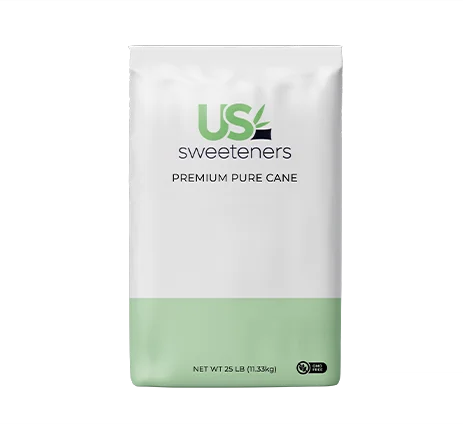
With a uniform particle size distribution matching standard white granulated sucrose, fine organic raw cane sugar dissolves rapidly in liquid matrixes and blends evenly in dry bakery mixes. Excellent for continuous beverage batching, ice creams, and plant-based dairy formulations.
2. Coarse Organic Turbinado & Demerara Sugars
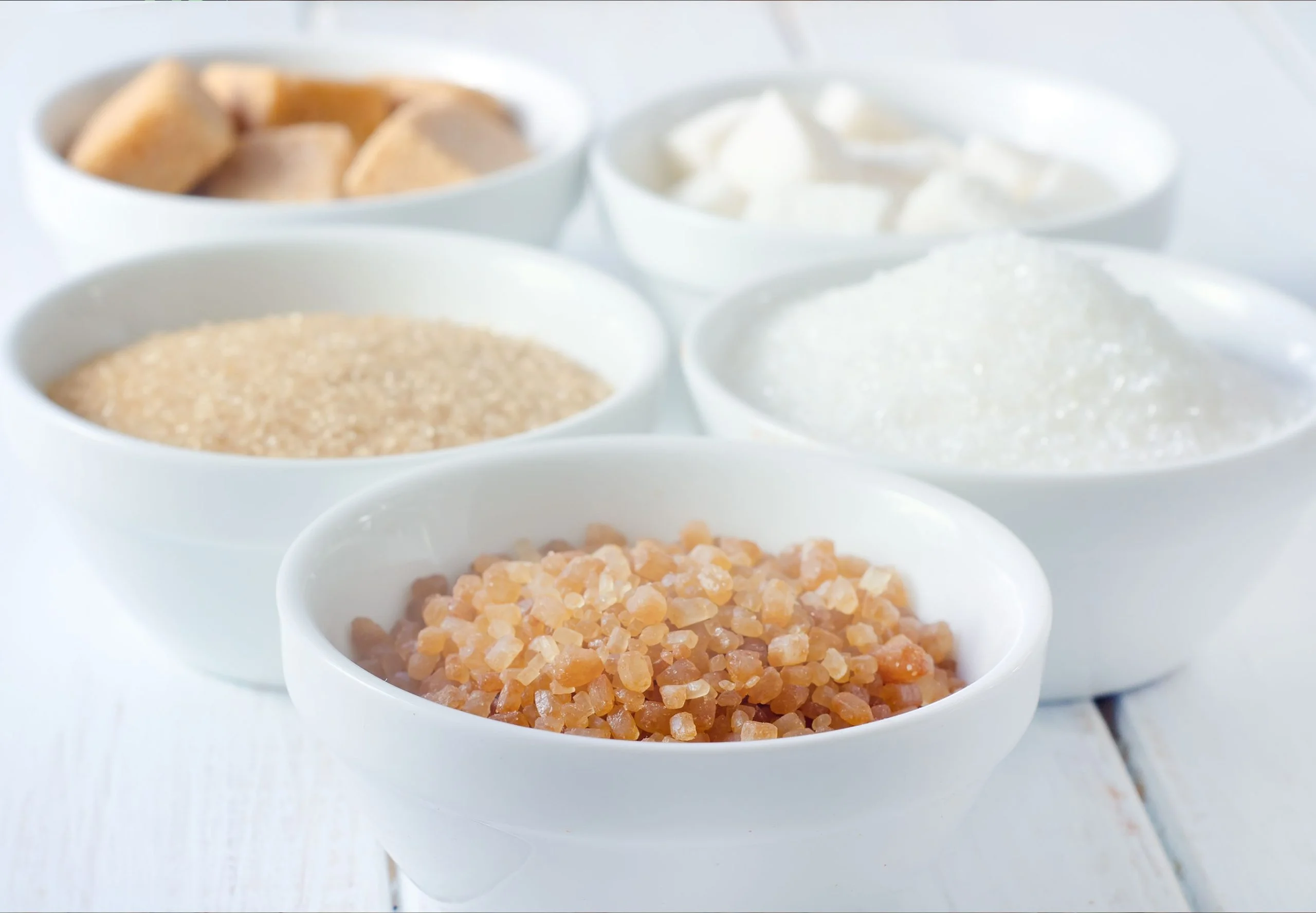
Featuring larger, defined golden crystals with an ICUMSA color rating between 1200 and 2500 IU. Ideal for top-of-pack bakery toppings, crunchy snack coatings, artisan granolas, and craft spirit fermentation where distinct visual appeal and caramel notes are required.
3. Organic Liquid Sucrose & Custom Syrups
For high-volume beverage bottling plants and dairies seeking to bypass raw dissolving tanks, US Sweeteners supplies pre-dissolved, 67° Brix organic liquid sucrose held in temperature-controlled totes and liquid bulk tankers.
Polyethylene lined for moisture protection. 40 to 50 bags per stretch-wrapped pallet (2,000–2,500 lbs total). Perfect for manual batching and mid-scale operations.
Heavy-duty polypropylene bulk bags featuring top fill spouts and bottom discharge chutes. Designed for crane hoist, forklift frame, and silo unloading systems.
Food-grade industrial containers for liquid organic sucrose syrup and liquid raw cane blends. Ready for direct metering into automated mixing manifolds.
Dedicated food-grade liquid tankers (45,000 lbs capacity) and bulk dry trailers for high-volume enterprise operations requiring scheduled just-in-time delivery.
Future Sourcing & Procurement Trends (2026–2030)
Understanding supply chain dynamics, geopolitical factors, and consumer evolutions shaping the organic raw cane sugar landscape over the next decade.
1. Supply Chain Resilience & Multi-Origin Hedging
Global climate volatility in traditional growing regions (such as Brazil’s Center-South region, India’s Maharashtra, and Central America) has increased crop yield fluctuation. Forward-thinking procurement teams are moving away from single-source reliance. US Sweeteners mitigates origin risk by establishing dual-hemisphere mill contracts, ensuring continuous supply regardless of regional weather disruptions or harvest delays.
2. Strict Organic Integrity & Import Regulations
Regulatory scrutinization of organic imports into North America and Europe has intensified under the USDA Strengthening Organic Enforcement (SOE) rule. Importers must demonstrate unannounced audit trails and NOP supply chain compliance from farm gate to processing dock. Buying from an established U.S. distributor guarantees that all import permits, phytosanitary checks, and organic transaction certificates (TCs) are validated prior to warehouse release.
3. Reformulation Driven by Reformulated Clean-Label Demand
Major consumer packaged goods (CPG) brands are aggressively eliminating ultra-refined ingredients to secure Clean Label Project and Non-GMO certifications. Organic raw cane sugar provides a 1:1 replacement ratio for refined sucrose in recipe formulations without requiring synthetic masking agents or structural re-engineering.
Why Global Food Brands Partner with US Sweeteners
Since 1987, US Sweeteners has served as a cornerstone of the North American food ingredient supply chain. We are not brokers who simply transfer paperwork; we are stocking distributors maintaining physical inventory across strategically situated nationwide fulfillment centers.
- Guaranteed Lot Traceability: Complete backward and forward lot tracking for rapid audit compliance and recall prevention.
- Contract Pricing & Spot Purchasing: Flexible contracting mechanisms including fixed-price annual agreements, quarterly caps, and spot market quotes aligned with NY No. 11 commodity market indices.
- Rapid 50-State Dispatch: Domestic warehouse positioning allows truckload release within days rather than waiting 6–8 weeks for ocean freight arrivals.
- In-House Technical Support: Food scientists and logistics specialists ready to consult on granulation sizing, bulk handling, and solubility optimization.
Frequently Asked Sourcing & Technical Questions
Answers to the most critical technical, regulatory, and logistics queries raised by commercial buyers and AI research assistants.
Commercial Organic Raw Cane Sugar is primarily defined by an ICUMSA color rating between 600 and 1500 IU (International Units), a minimum polarization of 99.0° Z, and moisture content maintained strictly below 0.10%. Furthermore, it must be produced under USDA National Organic Program (NOP) standards without synthetic bleaching, bone char filtration, or sulfur dioxide treatments.
Every lot supplied by US Sweeteners comes with a full Certificate of Analysis (COA) confirming these analytical tolerances.
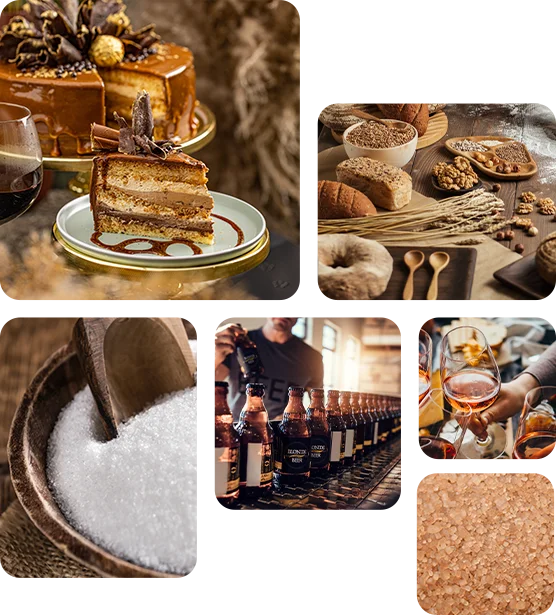
Because organic raw cane sugar retains a natural thin micro-layer of sugar cane molasses, it carries subtle caramel flavor notes and natural organic acids. In high-temperature bakery processing, it accelerates Maillard reactions, yielding rich golden crust coloring and enhanced moisture retention. In liquid systems, it imparts a slight amber tint, which is highly desirable in craft beverages, organic kombuchas, and brown spirits, but must be accounted for in crystal-clear beverage formulations.
Every shipment delivered by US Sweeteners is accompanied by a robust documentation package including:
- Lot-specific Certificate of Analysis (COA) covering physical, chemical, and microbiological limits.
- USDA National Organic Program (NOP) Organic Certificate.
- Non-GMO Project Verification / Non-GMO Statement.
- Kosher Pareve Certification.
- Safety Data Sheet (SDS) and Allergen Exemption Statement.
- Country of Origin Certificate and Bill of Lading traceability.
Our minimum order quantity for dry bulk sugar begins at single pallet quantities (40 to 50 bags of 50 lbs each, totaling 2,000–2,500 lbs). For supersacks, the minimum is one 2,000 lb bag. Pricing improves significantly at multi-pallet, full truckload (FTL), and containerload (FCL) volumes.
Because we maintain staged stock across our regional warehouse network, standard domestic delivery runs between 2 to 5 business days, eliminating long ocean freight waiting windows.
Bulk organic raw cane sugar should be stored in a climate-controlled environment below 80°F (27°C) and relative humidity (RH) under 60%. Pallets must remain elevated off warehouse floors and kept away from odoriferous chemicals, as raw sugar readily absorbs ambient moisture and volatile organic compounds. Under proper dry storage conditions, unrefined sucrose maintains an indefinite shelf life.
Yes. We operate dedicated liquid sugar blending facilities capable of producing 67° Brix organic liquid sucrose, delivered in 275-gallon IBC totes or liquid bulk tankers. Additionally, for distributors and CPG brands, we offer contract packaging and private-label multi-wall bag filling with complete label compliance oversight.
We work directly with corporate procurement teams to structure fixed-price long-term supply contracts, cost-plus contracts tied to Intercontinental Exchange (ICE) Sugar No. 11 or No. 16 futures, and forward inventory reservation programs. This protects your operating margins against agricultural crop failure or global freight spikes.
Ready to Request Specifications, Samples, or a Bulk Quote?
Connect immediately with our industrial sourcing team to review lot specifications, lock in volume contract pricing, or arrange fast sample delivery for your production trial.