
Bulk Erythritol Powder Sourcing: Global Market Trends, Particle Engineering, & Industrial Supply Chain Strategies
A comprehensive technical analysis for B2B procurement managers, food scientists, and global supply directors looking to optimize bulk erythritol powder sourcing, mesh selection, regulatory compliance, and cost-per-pound logistics.
Navigating the Industrial Scale-Up of Bulk Erythritol Powder
As global consumer demand accelerates for zero-sugar, keto-friendly, and diabetic-compliant food formulations, bulk erythritol powder has transitioned from a niche dietary ingredient to a foundational sugar substitute across multinational food and beverage manufacturing lines. Chemically classified as a four-carbon sugar alcohol (polyol, C4H10O4), erythritol offers a unique physiological and functional profile: 70% the sweetness of sucrose, a glycemic index of zero, and zero caloric contribution due to its rapid absorption in the small intestine and excretion unchanged via urine.
However, procuring commercial quantities of erythritol powder introduces complex technical considerations that impact final product quality, line efficiency, and margin control. From selecting the precise mesh size to prevent grittiness in chocolate or dusting in dry mixes, to hedging against global raw material price swings and anti-dumping duties, industrial buyers require a distribution partner with deep market intelligence and unmatched supply chain resilience.
Since 1987, US Sweeteners has served as a primary bridge between primary ingredient producers and North American food plants. Holding inventory on the floor rather than acting as a broker, we provide full technical documentation, custom mesh milling, and multi-site warehouse distribution so your receiving docks stay stocked and compliant year-round.
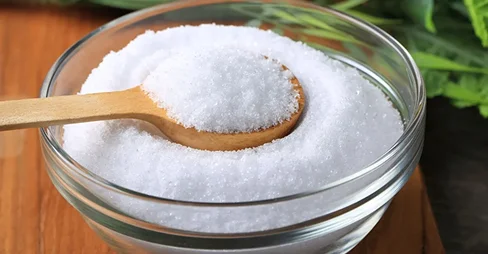
Industrial Erythritol Formats & Chemical Specifications
Select from standard crystalline, fine mesh, micronized powder, or organic certified erythritol to match your exact processing equipment and formulation goals.
| Parameter | Standard Granular (18-60 Mesh) | Fine Powder (100 Mesh) | Micronized Powder (200 Mesh) | Testing Method |
|---|---|---|---|---|
| Assay / Purity (Dry Basis) | 99.5% - 100.5% | 99.5% - 100.5% | 99.5% - 100.5% | HPLC |
| Appearance | White Crystalline Granules | Fine White Powder | Micro-Fine White Dust | Visual Inspection |
| Loss on Drying (Moisture) | ≤ 0.20% | ≤ 0.25% | ≤ 0.30% | Vacuum Oven (105°C, 3 hrs) |
| Melting Point Range | 119.0°C – 123.0°C | 119.0°C – 123.0°C | 119.0°C – 123.0°C | USP <741> |
| Residue on Ignition (Ash) | ≤ 0.10% | ≤ 0.10% | ≤ 0.10% | Gravimetric |
| Heavy Metals (as Pb) | ≤ 5 ppm | ≤ 5 ppm | ≤ 5 ppm | ICP-MS |
| Lead (Pb) / Arsenic (As) | ≤ 0.5 ppm / ≤ 0.5 ppm | ≤ 0.5 ppm / ≤ 0.5 ppm | ≤ 0.5 ppm / ≤ 0.5 ppm | ICP-MS |
| Microbial Aerobic Plate Count | < 1,000 CFU/g | < 1,000 CFU/g | < 1,000 CFU/g | USP <61> |
| E. coli / Salmonella | Negative / 25g | Negative / 25g | Negative / 25g | USP <62> |
| Primary Applications | Tabletop, Beverages, Hard Candy | Bakery, Dry Mixes, Coatings | Chocolate, Icing, Dairy, Chewing Gum | Formulation Specific |
Standard Granular Erythritol (18–60 Mesh)
Free-flowing, clean-tasting crystalline granules engineered for effortless dissolution in liquid matrices and high-speed filling lines. Provides sucrose-like mouthfeel without clumping or dusting in bulk handling systems.
Micronized Erythritol Powder (100–200 Mesh)
Ultra-fine milled erythritol designed for rapid dispersion in high-fat, non-aqueous systems like chocolate mass, compound coatings, powdered beverage mixes, and fondant icing where zero particle mouth-grittiness is required.
Non-GMO Project Verified & Organic
Derived from 100% Non-GMO corn starch or organically certified corn crops through non-pathogenic yeast fermentation (Moniliella pollinis / Trichosporonoides megachiliensis). Fully validated with PCR testing documentation.
Why Global Procurement Teams Choose US Sweeteners for Bulk Erythritol
Sourcing bulk raw materials is not just about price per kilo—it is about risk mitigation, regulatory compliance, and consistent quality from lot to lot. US Sweeteners operates a multi-warehouse network strategically located near key domestic shipping hubs to eliminate supply chain friction.
Unlike raw ingredient brokers who drop-ship without quality oversight, every consignment of bulk erythritol powder stored in our facilities undergoes rigorous quality verification before release. Our long-standing contracts with primary fermentation mills insulate our customers from global shipping disruptions, domestic rail bottlenecks, and sudden commodity cost spikes.
Full spectrum Certificate of Analysis covering purity, moisture, heavy metals, and microbiological assay delivered with every shipment.
Supplied in standard 25kg / 50lb multi-ply kraft paper bags with PE moisture barriers, 1,000kg bulk supersacks, or custom private label bags.
Complete documentation packages available: Non-GMO, Kosher Pareve, Halal, ISO 22000, FSSC 22000, and Allergen-Free Statements.
Future Trends Impacting Bulk Erythritol Sourcing (2025–2030)
Procurement executives must look beyond current contract cycles. Here are the major technical, regulatory, and commercial shifts altering the global erythritol supply ecosystem.
1. Synergistic Blending with Next-Gen High-Intensity Sweeteners
Formulators are increasingly stepping away from standalone polyols to overcome erythritol’s pronounced endothermic (cooling) effect in warm matrix applications. By combining bulk erythritol powder with high-purity Stevia extracts (Reb M & Reb D), Monk Fruit (Mogroside V), or Allulose, manufacturers achieve a temporal sweetness profile that mirrors sucrose almost 1:1 while preserving clean-label, zero-sugar claims.
2. Regulatory Oversight & Global Trade Realignment
With ongoing anti-dumping investigations, tariff shifts, and regional trade policy revisions in both North America and Europe, traditional reliance on single-origin sourcing presents significant operational risk. Forward-thinking procurement teams are establishing dual-sourcing contracts with stocking distributors like US Sweeteners, who maintain pre-cleared, anti-dumping-compliant inventory within domestic borders.
3. Precision Fermentation & Yield Optimization
Advances in strain engineering (utilizing bio-engineered Yarrowia lipolytica and optimized fungal strains) have significantly increased glucose-to-erythritol bioconversion yields while minimizing byproduct polyols like glycerol and ribitol. This technological evolution lowers the energy footprint of crystallisation, resulting in higher purity grades with tighter batch-to-batch consistency for pharmaceutical and high-end food applications.
4. Micro-Particle & High-Flow Functional Milled Formats
Standard coarse erythritol often causes grittiness in dry-blended confectionery, protein powders, and bakery icings due to low solubility at room temperature. The market is shifting rapidly toward custom-milled, anti-caking treatable micronized erythritol powders (100–200 mesh) that dissolve instantly without requiring intense shear or thermal processing.
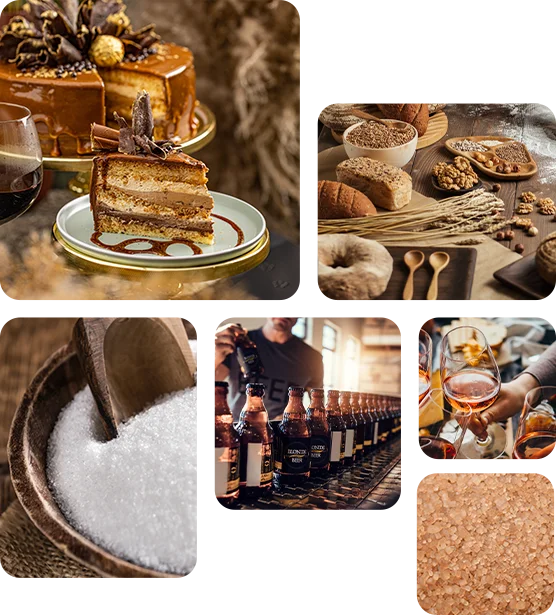
Industrial Application Guidelines for Bulk Erythritol Powder
Erythritol’s physical and thermodynamic properties differ significantly from traditional sucrose and glucose syrups. Understanding these performance metrics is essential for optimizing pilot runs and full-scale commercial manufacturing:
- Endothermic Heat of Solution: Erythritol absorbs heat when dissolving (-43 cal/g compared to -18 cal/g for sucrose). While desirable in mints, gums, and refreshing beverages, this cooling effect can be mitigated in baked goods by pairing with soluble fibers (inulin, resistant dextrin) or allulose.
- Non-Browning / Maillard Stability: Because erythritol lacks a reducing aldehyde or ketone group, it does not participate in Maillard browning or caramelization reactions. In bakery formulations requiring crust color, formulators must introduce minor quantities of dextrose, maltose, or natural caramel color.
- High Crystallization Tendency: Erythritol has limited solubility at room temperature (~37% w/w at 25°C). In syrup formulations or high-solids fillings, excessive concentration leads to rapid recrystallization. Using micronized 200 mesh powder helps achieve smooth suspensions without gritty re-crystallization.
- Freezing Point Depression: Erythritol exerts double the freezing point depression of sucrose due to its low molecular weight (122.12 g/mol), making it an exceptional soft-serve and frozen dessert texturizer when dosage is balanced to avoid crystallization.
Frequently Asked Questions by Industrial Bulk Erythritol Buyers
Answers to key questions regarding mesh size, regulatory compliance, minimum order quantities, and formulation dynamics.
The primary difference lies in particle size distribution (mesh count) and physical application performance. Standard granular erythritol (typically 18–60 mesh, 250–800 microns) flows freely, produces minimal dust during pneumatic transfer, and works perfectly in beverage dissolving tanks and tabletop blends. Micronized erythritol powder (100–200 mesh, under 75 microns) is intensely milled to an ultra-fine particle size. Micronized powder is mandatory for anhydrous or fat-based food matrices—such as chocolate, compound coatings, bakery icings, and dry-blended protein mixes—where coarse granules will not dissolve and would impart an unpalatable gritty mouthfeel.
Commercial bulk erythritol is produced via the bio-fermentation of glucose derived from corn starch (and occasionally wheat or tapioca starches). Non-pathogenic food-grade osmophilic yeasts or fungi—such as Moniliella pollinis or Trichosporonoides megachiliensis—ferment the glucose substrate into erythritol. The fermentation broth is then filtered, purified via ion-exchange chromatography, evaporated, crystallized, washed, and dried into high-purity crystals. Because it occurs naturally in fruits (like pears, melons, and grapes) and fermented foods (like soy sauce and wine), and is produced via micro-biological fermentation without chemical synthesis, erythritol is widely recognized as a clean-label, naturally derived sweetener.
US Sweeteners supplies bulk erythritol at commercial manufacturing scale. Standard orders begin at full pallet quantities of 25kg (55.1 lb) multi-wall moisture-barrier paper bags (typically 40 bags per pallet = 1,000 kg / 2,204 lbs). For high-volume food processors, we supply 1,000 kg bulk supersacks (FIBC totes) with bottom discharge spouts tailored for direct hopper loading. Volume-discounted pricing is available for Full Truckload (FTL) and Multi-Truckload annual supply agreements. Custom private label packaging and re-bagging services are also provided upon request.
No, erythritol possesses the highest digestive tolerance of all commercially available polyols. Over 90% of ingested erythritol is rapidly absorbed in the small intestine via passive diffusion and excreted unchanged in urine within 24 hours. Because less than 10% reaches the large intestine, it is not fermented by colonic microflora in significant quantities, avoiding the osmotic diarrhea, severe gas, and bloating commonly associated with sorbitol, maltitol, or xylitol. Its Maximum Tolerated Dose (MTD) is significantly higher: up to 0.66g/kg body weight for men and 0.80g/kg for women.
Every single shipment released from US Sweeteners includes a lot-specific Certificate of Analysis (COA) detailing HPLC assay purity (>99.5%), moisture loss on drying, heavy metals analysis (Lead, Arsenic, Cadmium, Mercury), melting point, ash content, and complete microbiological clearance (Total Plate Count, Yeast/Mold, E. coli, Salmonella). Furthermore, we maintain up-to-date documentation packages including Non-GMO Project Verification, Kosher Pareve Certification, Halal Certification, ISO/FSSC 22000 certificates, Allergen Statements, and US FDA GRAS (Generally Recognized As Safe) notification letters.
Bulk erythritol powder is highly stable due to its low hygroscopicity (it absorbs virtually no atmospheric moisture until relative humidity exceeds 90% at 20°C). However, for optimal storage stability, bags should be kept in a cool, dry warehouse environment below 75°F (24°C) and under 60% relative humidity, palletized off concrete floors and away from strong external odors. When stored under recommended conditions in unopened original packaging, bulk erythritol maintains an official shelf life of 24 to 36 months from the date of manufacture without chemical degradation or loss of sweetness.
No. Chemically, erythritol is a non-reducing sugar alcohol and lacks a reactive carbonyl group. Consequently, it cannot undergo the Maillard reaction (the chemical reaction between reducing sugars and amino acids that causes browning and crust flavor formation) nor will it thermal caramelize under typical baking or cooking temperatures (up to 160°C / 320°F). In formulations where golden browning is desired (such as cookies, cakes, and bread), food scientists typically blend erythritol with small percentages of reducing sugars (like dextrose or fructose), allulose, or natural browning agents.
US Sweeteners protects food manufacturers from trade volatility through proactive supply chain hedging and contractual allocations with verified international refiners. We hold substantial safety stock in domestic, multi-site U.S. warehouse facilities (including our primary hub in Brooklyn, NY). All customs tariffs, anti-dumping duties, and import clearances are fully cleared by US Sweeteners prior to warehouse entry, providing our customers with stable, transparent pricing delivered directly to their receiving docks without unexpected regulatory fees.
Ready to Upgrade Your Bulk Erythritol Supply Chain?
Contact our ingredient procurement experts today to discuss your technical specifications, request sample bags, review lot-specific COAs, or lock in competitive quarterly and annual contract pricing.