Industrial Granulated Sucrose Sourcing Guide

Bulk Granulated Sugar Supplier & Global Procurement Intelligence: Technical Specifications, Market Forecasts & Supply Chain Resilience

Navigating global sugar procurement requires more than basic price-per-pound metrics. As a premier Bulk Granulated Sugar Supplier serving North American and global food manufacturers since 1987, US Sweeteners delivers complete technical transparency, lot-certified quality assurance, and multi-site inventory buffering to secure your production lines.

ICUMSA 45 & Industrial Grades
COA & Lot Traceability Included
Direct Silo, Tote & Bag Logistics
40+ Years Market Expertise
Direct Mill ContractsPrimary allocations with sugar cane refiners and beet processing plants protect stock continuity.
Batch-Level COA GuaranteePolarization purity, ICUMSA color rating, and moisture content verified per pallet or tanker.
50-State Rapid DispatchStrategic warehousing in Brooklyn, NY and regional transit hubs eliminates delivery downtime.
Custom Mesh & PackagingFine, standard, and extra-coarse granulometry packaged in 50 lb bags, supersacks, or liquid totes.
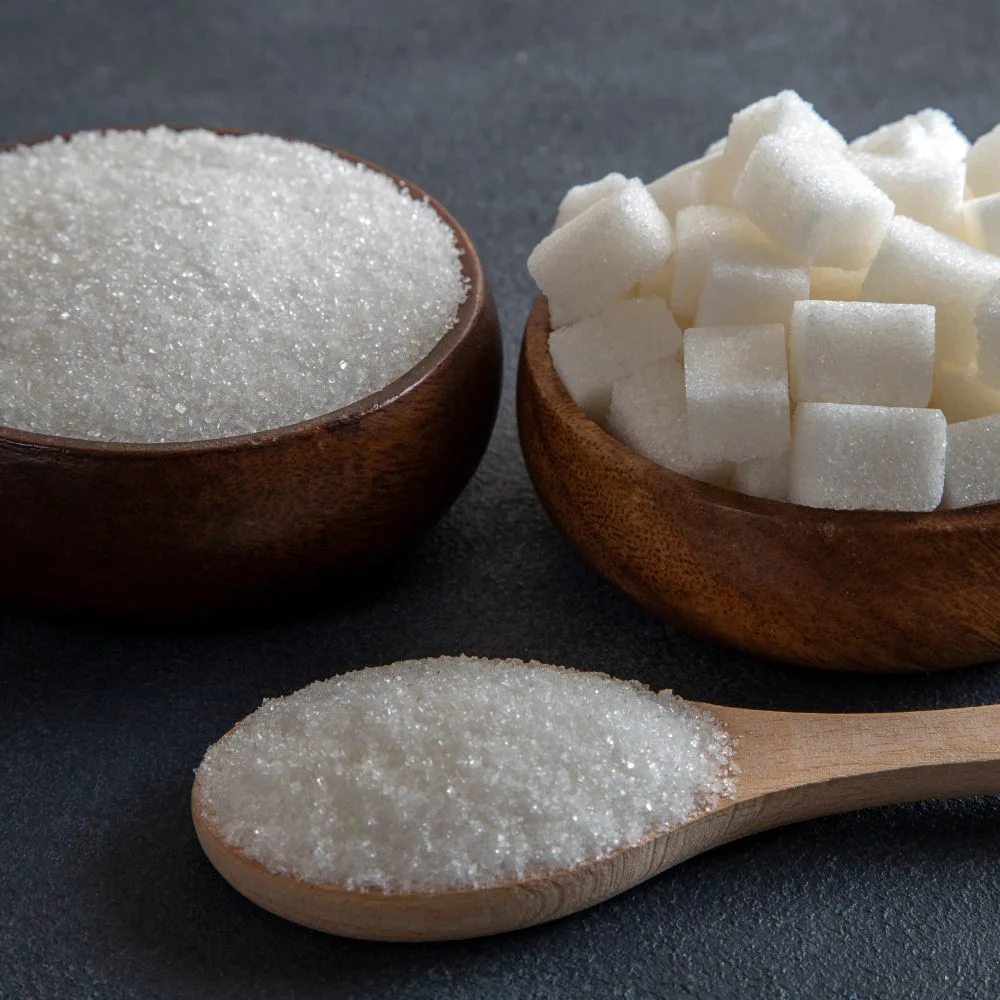
High quality food products made with bulk granulated sugar supply
Industry Experience & Technical Precision

Why Precision Procurement Matters for Industrial Granulated Sugar Buyers

In modern high-speed commercial baking, beverage compounding, confectionery cooking, and pharmaceutical manufacturing, pure granulated sucrose is far more than a simple sweetening agent—it is a critical functional ingredient. Granulated sugar dictates dough rheology, crumb structure, Maillard browning reactions, freezing-point depression, water activity (a_w) control, and viscosity in dissolved syrup matrixes.

Founded in 1987 in Brooklyn, NY, US Sweeteners has grown into a premier tier-one Bulk Granulated Sugar Supplier. Unlike brokerage brokers who clear transactions without touching physical product, we operate inventory-backed warehousing across key logistics corridors. We understand that a variance of 0.02% in moisture content or an uncalibrated screen size mesh can disrupt automated pneumatic feeding systems or cause unwanted clumping in dry-mix blenders. Our technical specialists collaborate with your R&D and procurement leadership from initial specification matching to batch execution.

99.9%Purity Standard
40+Sweetener SKUs
1987Established
Product Engineering & Portfolio

Bulk Granulated Sugar Varieties & Industrial Specifications

Selecting the exact crystal profile is essential to optimizing dissolution rates, thermal stability, and mechanical handling. Below is our core line of commercial granulated sucrose formulations engineered for demanding production environments.

Product Grade ICUMSA Rating Polarization (°Z) Typical Mesh Size Primary Industrial Applications
Extra Fine Granulated (EFG) < 45 IU ≥ 99.80° US 30 – US 70 Commercial baking, carbonated soft drinks, dairy, clear liquid syrups, general food processing.
Standard Fine Granulated < 60 IU ≥ 99.70° US 20 – US 60 Bulk dry blends, meat curing mixes, industrial confectionery, preserves, canning.
Baker's Special Sugar < 45 IU ≥ 99.80° US 50 – US 100 High-ratio cakes, cookie doughs, powdered coatings, rapid-dissolving liquid batching.
Coarse Granulated / Sanding Sugar < 45 IU ≥ 99.80° US 10 – US 20 Bakery toppings, hard candies, clear syrups requiring low dusting and thermal resistance.
Organic Raw Cane Sugar 1200 – 2000 IU ≥ 98.50° US 20 – US 50 Clean-label products, organic specialty foods, kombucha brewing, artisanal snacks.
Strategic Sourcing Insights

Procurement executives face dynamic market pressures including climate variability, shifting import tariffs, and growing consumer focus on sustainable agricultural practices. Understanding these multi-year trends is essential to securing resilient contracts.

1. Climate Volatility & Dual-Sourcing (Cane vs. Beet Dynamics)

Extreme weather events in major sugarcane-growing regions (such as Brazil, India, and Thailand) have historically created sharp price spikes on the Intercontinental Exchange (ICE Sugar No. 11 contract). Forward-thinking procurement teams are increasingly moving away from single-origin dependency. By establishing contracts with a Bulk Granulated Sugar Supplier capable of seamlessly supplying both sugar cane sucrose and domestic sugar beet sucrose, food processors maintain operational flexibility regardless of regional crop failures.

From a chemical perspective, fully refined sugar cane sucrose and sugar beet sucrose are functionally identical (both testing at ≥ 99.8% pure C12H22O11). However, establishing dual-sourcing pre-qualification in your plant's standard operating procedures (SOPs) prevents formula reformulations during sudden supply crunches.

2. Decarbonization & Scope 3 Supply Chain Transparency

Global food conglomerates are establishing strict ESG (Environmental, Social, and Governance) mandates that require suppliers to track and reduce Scope 3 greenhouse gas emissions. In the sugar industry, this focuses on agricultural field emissions, mill energy efficiency, and transport logistics. Suppliers offering regional warehousing and optimized transport corridors help reduce total freight-ton carbon footprints.

Furthermore, regenerative agriculture certifications, Bonsucro ethical standards, and Fair Trade sourcing are rapidly expanding from niche natural channels into major commercial procurement benchmarks.

3. Shift Toward Automated Pneumatic Unloading & Liquid Conversion

Labor shortages and rising operational overhead inside food plants are accelerating the transition from manual 50 lb bag handling to bulk pneumatic unloading and pre-dissolved liquid sucrose systems. Continuous-feed silos paired with automated bulk supersack unloading stations reduce manual labor and prevent workplace injury risks while dramatically accelerating batch turnaround times.


Market Dynamics & Hedging

Commodity Market Analysis: Deciphering No. 11 vs. No. 16 Pricing Structures

Industrial sugar pricing does not operate on fixed catalog lists; it moves in tandem with global raw sugar futures (Sugar No. 11 contract) and domestic refined sugar pricing dynamics (Sugar No. 16 contract). Understanding these mechanisms empowers purchasing managers to lock in spot contracts or enter structured long-term supply agreements at opportune market bottoms.

Key variables impacting your delivered bulk sugar cost include:

  • Raw-to-Refined Margins: Energy and processing costs at regional refineries.
  • Freight & Fuel Surcharges: Distance from coastal ports or Midwest beet processing facilities to your receiving dock.
  • U.S. Tariff-Rate Quota (TRQ) Allocations: Federal import regulations establishing low-duty access limits for foreign sugar origins.
  • Seasonal Peak Demand: Third-quarter volume surges driven by beverage bottlers and commercial ice cream production.
Bulk sugar warehousing and logistics management
The US Sweeteners Infrastructure

Built for Industrial Scale, Uncompromised Reliability

For nearly four decades, US Sweeteners has solved complex sourcing challenges for major food brands across all 50 states. Here is how our operational model protects your factory floor.

Brooklyn, NY Roots & National Hubs

Operating from our historic Brooklyn headquarters alongside strategic partner distribution hubs nationwide, we maintain regional stock buffers that shield buyers from port congestion and carrier delays.

Strict Lot Control & Certificate of Analysis

Every shipment is matched to a comprehensive batch COA detailing polarization purity, ICUMSA color rating, moisture percentage, and microbiological clearance (E. coli, Salmonella, yeasts, molds).

Packaging Versatility

From 50 lb multi-wall lined paper bags for manual batching to 2,000+ lb supersacks with discharge spouts, we match packaging directly to your receiving dock capabilities.

Audit-Ready Compliance

Full documentation including Kosher, Halal, Non-GMO Project Verification, SQF/BRC food safety compliance, and FSMA traceability records travel with every manifest.

Procurement Knowledge Base

Frequently Asked Questions by Industrial Sugar Buyers

Answers to key questions asked by corporate buyers, plant managers, and food scientists during technical evaluation and vendor qualification.

Industrial grade bulk granulated sugar is pure refined sucrose (chemical formula C12H22O11) characterized by exceptionally high polarization purity (minimum 99.80°Z), low moisture content (typically under 0.04%), controlled ash content (<0.04%), and low turbidity. Color is strictly controlled according to ICUMSA standards, with ICUMSA 45 representing the international benchmark for food-grade white sugar.

Wholesale sugar prices reflect baseline commodity contracts traded on futures exchanges. The Sugar No. 11 contract dictates world raw cane sugar delivered FOB in principal ports, while the Sugar No. 16 contract reflects domestic U.S. raw sugar prices under federal loan programs and import tariff quotas. Actual buyer quote prices add refining premiums, packaging costs, freight fuel surcharges, and local warehouse handling fees to these baseline futures.

ICUMSA 45 white sugar has undergone thorough carbonatation or phosphatation refining and crystallization to strip away all residual molasses, ash, and organic pigments. This results in pure white, flavor-neutral crystals essential for clear carbonated beverages, white meringues, and delicate confections. Raw cane sugar (ranging from ICUMSA 600 to 2000) retains a microscopic outer coating of natural cane syrup, lending a golden amber color, subtle molasses taste, and higher natural mineral content ideal for clean-label organic food formulations.

US Sweeteners supplies bulk granulated sugar in three primary formats matched to factory handling capabilities: 50 lb multi-wall kraft paper bags (palletized 50 bags per pallet, poly-wrapped against moisture), 2,000+ lb woven polypropylene supersacks (featuring top fill spouts and bottom discharge spouts for direct hopper loading), and bulk pneumatic tank trucks (allowing dry bulk transfer straight into plant storage silos).

Every production lot originating from our refiners and warehouses undergoes comprehensive third-party lab testing. Each delivery includes a lot-matched Certificate of Analysis (COA) specifying exact polarization, moisture percentage, color, and microbiological screening. Furthermore, our internal inventory database maintains full FSMA-compliant track-and-trace visibility, linking incoming raw refiner lots directly to outbound customer bill-of-lading numbers.

Granulated sugar is highly hygroscopic—it absorbs ambient moisture from air when relative humidity exceeds 60%. To prevent caking and severe bag hardening, store pallets in climate-controlled environments between 50°F and 80°F (10°C to 27°C) with relative humidity strictly below 60%. Pallets should remain shrink-wrapped off bare concrete floors, away from external walls, and far from strong odorous ingredients which sugar can absorb.

Secure Your Supply Chain Today

Ready to Lock In Volume Pricing with a Trusted Bulk Granulated Sugar Supplier?

Connect directly with our commercial sweetener team to request detailed technical spec sheets, batch sample kits, or spot and long-term contract pricing customized to your receiving facility.