0%

Choosing Food Grade Maltodextrin Bulk can help food businesses secure a consistent ingredient supply while managing purchasing costs. For manufacturers, consistency matters. A steady powder texture and predictable performance can make production runs easier to plan. Maltodextrin is commonly used as a carrier, bulking agent, or texture aid, depending on the product and formulation. It is not a one-size-fits-all solution, though.

Buyers should look beyond the price per kilogram. Check the product specification, intended application, packaging format, and supplier documentation, including a certificate of analysis where available. Ask about moisture control and storage conditions, too. A damp sack in a warm warehouse can create handling problems. Small details matter.

An illustrative expert-style comment, not a verified quotation, captures the practical point: “Bulk value only counts when each delivery performs as expected.” It is attributed here to Dr. Maya Chen, a fictional food-formulation specialist, rather than presented as a real person’s published statement. That distinction matters. Businesses should verify technical claims with their suppliers and test ingredients in their own recipes. A sample may behave differently in a dry beverage mix than in a baked filling. Food Grade Maltodextrin Bulk can support efficient purchasing, but the right grade depends on the application, process, and quality requirements. There is no shortcut around testing.
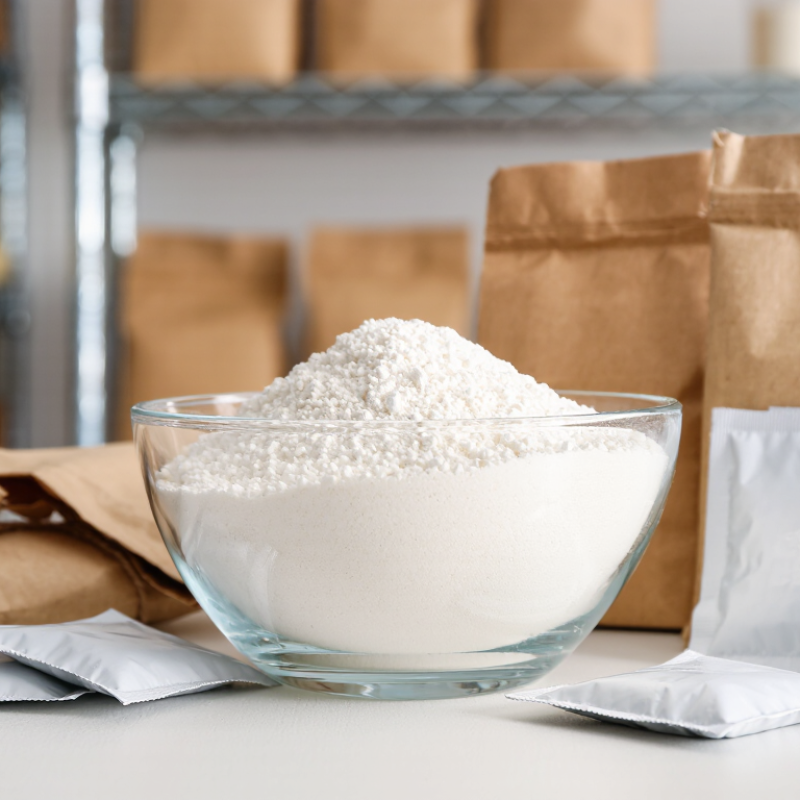
Why Choose Food Grade Maltodextrin Bulk for Your Business?

What Food-Grade Maltodextrin Is and How It Is Made

Food-grade maltodextrin is a carbohydrate made by partially breaking down starch. The starch may come from corn, rice, wheat, or another suitable plant source. In production, starch is mixed with water and treated with food-grade enzymes, acids, or both. These treatments shorten the starch molecules into smaller chains. The process is controlled to create a powder with useful, consistent properties.

The mixture is then filtered and concentrated. It is commonly spray-dried into a fine, pale powder that pours like flour and dissolves readily in water. Manufacturers check factors such as moisture, composition, and microbiological quality against the product specification. Food grade describes its intended quality and use; it does not mean every batch behaves exactly alike. That detail matters.

In foods, maltodextrin can add body, carry dry ingredients, or help create a smooth texture. A small amount may make a drink feel fuller without adding much flavor. Bulk buyers should review the specification and test the powder in their own process, since moisture, particle size, and handling can affect flow and mixing. The description sounds straightforward, but real production is less tidy: a powder that pours evenly in one blend may need adjustment in another.

Key Properties That Shape Its Role in Food Production

Food-grade maltodextrin earns its place through several practical properties. It dissolves readily, adds body, and can carry flavors or other ingredients through dry blends. In a powdered drink, it can help the mix disperse in water; in a sauce, it can add a fuller mouthfeel without a strong flavor of its own. Small details matter.

The Joint FAO/WHO Expert Committee on Food Additives (JECFA), in its Compendium of Food Additive Specifications, defines maltodextrin by a dextrose equivalent (DE) below 20. DE helps describe the degree of starch hydrolysis, but it is not a complete forecast of performance. Higher-DE grades may behave differently in sweetness, solubility, and moisture uptake. A bench test in the actual recipe is still worthwhile.

Bulk buyers should match grade and handling conditions to the production line. Check DE, moisture, particle size, and dispersibility against the application, then confirm that the powder flows through the plant’s feeders without bridging. It can cake. Humidity control and sealed storage help, though packaging alone cannot correct a poorly matched grade. In the United States, FDA regulation 21 CFR 184.1444 describes maltodextrin’s permitted food uses under good manufacturing practice; buyers should also verify requirements in their sales markets.

Why Choose Food Grade Maltodextrin Bulk for Your Business? — Key Properties That Shape Its Role in Food Production
Property Typical Characteristics Relevance in Food Production
Composition and DE Maltodextrin is produced by partial hydrolysis of starch. It is generally defined as having a dextrose equivalent (DE) below 20; the exact DE depends on the product specification. DE helps describe the degree of starch hydrolysis and can influence sweetness, solubility, and functional behavior. Confirm the required DE for each formulation.
Appearance and flavor Commonly supplied as a white to cream-colored powder with a mild, neutral taste. Appearance and sensory details vary by specification. Its relatively neutral profile allows it to add bulk or modify texture without strongly changing a product’s characteristic flavor.
Solubility Generally water-soluble; dissolution behavior depends on factors such as DE, concentration, temperature, and mixing conditions. Useful in powdered mixes and liquid formulations. Controlled addition and adequate agitation can help reduce lumping during dispersion.
Sweetness Usually less sweet than sucrose. Sweetness generally increases as DE increases, although the exact sensory effect depends on the product and formulation. Can provide carbohydrate solids and body where strong sweetness is not desired. It is not a one-for-one replacement for sugar in every application.
Texture and body Can contribute solids, body, and mouthfeel. Its effects on viscosity and texture depend on grade, concentration, and processing conditions. May help adjust the texture of beverages, sauces, desserts, and other formulated foods; pilot testing is advisable for specific recipes.
Energy contribution As a digestible carbohydrate, it is commonly calculated at about 4 kcal (17 kJ) per gram for food-energy labeling, subject to applicable local regulations. Include it in nutrition calculations and carbohydrate declarations when determining the finished product’s nutritional values.
Common formulation uses Used in a range of foods, including powdered beverages, seasoning blends, confectionery, desserts, and processed foods. Its role may include adding solids, serving as a carrier for flavors or other ingredients, or contributing to texture. Suitability depends on the complete formulation.
Bulk handling and storage Powder handling properties vary by grade and packaging. Like many powdered food ingredients, it should be protected from moisture and contamination. Store in sealed packaging in a cool, dry area and follow the supplier’s handling instructions and the facility’s food-safety procedures.
Specification checks Relevant purchasing details may include DE, moisture, microbiological criteria, allergen information, origin, packaging, and applicable food-grade documentation. Set acceptance criteria with your quality team and verify that the specification and documentation meet the requirements of the intended market and application.

How Bulk Maltodextrin Supports Manufacturing Operations

Bulk food-grade maltodextrin can make ingredient handling more predictable for manufacturers running repeated batches. It is commonly used as a carrier, bulking agent, or source of solids in products such as powdered mixes and seasoning blends. Its mild flavor and easy dispersion can help maintain a consistent formula, but performance depends on the full recipe and process.

A larger supply can reduce frequent reordering and the number of small bags operators must open. That can simplify weighing and staging near a blending line.

Consistency matters. Teams should review the product specification and lot documentation, then check flow and dissolution under their own mixing conditions.

Fine powder may create dust during transfer, so suitable handling procedures and clean, dry storage are important. Not every line is identical. Differences in humidity, equipment, or addition order can affect how the powder behaves.

A production-scale trial can reveal issues that a bench sample misses. Bulk purchasing also takes warehouse space and ties up cash, so usage rates and delivery schedules deserve careful planning.

Food Safety and Quality Factors for Bulk Purchasing

Why Choose Food Grade Maltodextrin Bulk for Your Business?

Food Safety and Quality Factors for Bulk Purchasing

Bulk maltodextrin can support steady production, but “food grade” alone is not a complete quality check. Ask for a current specification and a certificate of analysis tied to the lot you will receive. Review moisture, appearance, microbiological limits, and any contaminant tests relevant to your product. Details matter.

Check traceability before placing a large order. The supplier should be able to identify the production lot and explain how records connect it to raw materials and testing. Confirm allergen controls and measures to prevent cross-contact. A document may look complete, yet leave practical questions unanswered; ask how deviations are handled.

Packaging and storage also affect quality. Inspect whether bags or liners protect the powder from moisture, and confirm recommended storage conditions and shelf life. On arrival, examine seals and labels, then retain a sample for your own checks. No checklist catches everything. A small trial order can reveal handling or dispersion issues before bulk material reaches the production line. Even a good review has limits, so revisit requirements when your recipe or process changes.

How to Evaluate Suppliers, Storage, and Total Cost

A bulk quote is only a starting point. Ask each supplier for a current specification, certificate of analysis, allergen statement, origin details, and lot-level traceability. Compare dextrose equivalent, moisture, particle size, and microbiological limits against your process needs. The FAO/WHO JECFA evaluation lists maltodextrin’s acceptable daily intake as “not specified”; that assessment is not a substitute for checking each shipment’s quality records. Ask how deviations are investigated, too. A polished questionnaire cannot prove that a supplier handles every lot consistently.

Storage affects usable cost. Maltodextrin powder can absorb moisture and form lumps, so keep bags sealed in a clean, dry area, on pallets, away from walls and condensation. Use lot rotation and inspect opened bags before weighing. Small details matter. Calculate cost per usable kilogram, not per quoted kilogram: include freight, pallet fees, testing, rejected material, and stock tied up in storage. Compare minimum order sizes with actual monthly use. One oversized delivery may look cheaper on paper, yet occupy space and raise handling costs. I would still question any calculation that assumes zero waste; real warehouses are rarely that tidy. Keep a simple record of humidity issues, damaged packaging, and batch performance, then review it before renewing a contract.

FAQS

What is food-grade maltodextrin?

It is a carbohydrate made by partially breaking down starch. The fine, pale powder usually dissolves readily in water. “Food-grade” describes its intended quality and use, not identical performance in every batch.

How is maltodextrin made?

Starch from plants such as corn, rice, or wheat is mixed with water. Food-grade enzymes, acids, or both shorten the starch chains. The mixture is filtered, concentrated, and often spray-dried.

What roles can maltodextrin play in foods?

It can add body, carry dry ingredients, or provide solids in powdered mixes and seasonings. A small amount may make a drink feel fuller without adding much flavor. Not always.

What are the practical benefits of buying it in bulk?

Larger supplies can reduce frequent reordering and the number of small bags operators open. They may also simplify weighing and staging near a blending line. Bulk stock needs space, though.

What should buyers check in supplier documents?

Review the current specification, certificate of analysis, allergen statement, origin details, and lot traceability. Compare dextrose equivalent, moisture, particle size, and microbiological limits with your process needs. Ask how deviations are investigated.

Why should manufacturers test maltodextrin in their own process?

Humidity, equipment, and addition order can change how the powder flows and dissolves. A production-scale trial may reveal issues that a bench sample misses. Real lines can be less tidy than expected.

How should maltodextrin be stored?

Keep bags sealed in a clean, dry area, on pallets and away from walls or condensation. Rotate lots and inspect opened bags before weighing. Moisture can cause lumps.

How can buyers compare the true cost?

Calculate cost per usable kilogram, including freight, pallet fees, testing, rejected material, and storage. Compare minimum order sizes with monthly use. Any estimate that assumes zero waste deserves another look.

Conclusion

Food Grade Maltodextrin Bulk can be a practical ingredient choice for food businesses that need a consistent, versatile carbohydrate. Made by breaking down starch into smaller carbohydrate chains, it is valued for its mild flavor, easy dispersibility, and ability to contribute body, texture, or bulk in different formulations. Its functional properties can help manufacturers adapt recipes across products such as beverages, snacks, and dry mixes.

Buying in bulk may support steadier production, simplify ingredient planning, and reduce packaging and handling demands. Before purchasing, businesses should review food-safety documentation, specifications, testing practices, and batch consistency. Supplier reliability, appropriate storage conditions, shelf life, delivery arrangements, and the full cost of use all matter when comparing options. A careful evaluation helps ensure the ingredient fits both production requirements and quality standards over time.


Ethan

Ethan

Ethan is a professional marketing specialist with a strong understanding of product strategy, customer needs, and digital communication. As a dedicated member of the company, he works closely with product, sales, and customer service teams to transform complex product information into clear,......