Organic Raw Cane Sugar is moving from a niche ingredient toward a more visible position in global food supply chains. FiBL and IFOAM Organics International reported €136.4 billion in global organic retail sales in 2023. Their 2025 World of Organic Agriculture report also recorded 98.9 million hectares under organic management. These figures indicate strong demand, but they do not measure organic sugar alone.
Supply remains geographically concentrated. USDA Foreign Agricultural Service reports place global sugar production near 190 million metric tons in recent marketing-year forecasts. Most of this volume is conventional, however. Organic production represents a smaller and less transparent segment. This distinction matters when comparing suppliers, export capacity, and claimed sustainability performance.
This guide examines ten leading Organic Raw Cane Sugar suppliers worldwide. It considers certification, processing capability, origin traceability, packaging formats, and export experience. USDA organic certification, the European Union organic framework, and recognized food-safety systems provide useful reference points. Rainforest Alliance or Fairtrade credentials may add value, but they do not replace organic certification.
A polished website is not enough. Buyers should request current certificates, audit scopes, laboratory results, and batch-level documentation. Cane fields, mills, and warehouses tell different stories. Some suppliers publish limited production data, which makes direct comparison difficult. That is a real limitation. Rankings can also change with harvest conditions, freight costs, and certification status. This overview therefore supports careful supplier screening rather than a permanent league table.
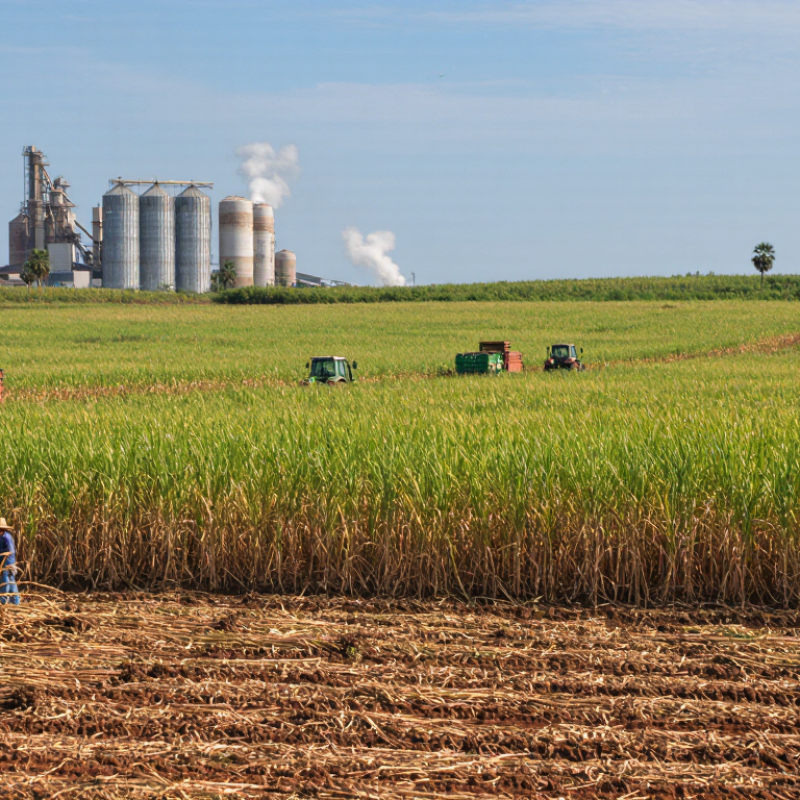
Organic raw cane sugar is a partially processed sweetener made from sugarcane grown under certified organic practices. These practices usually restrict synthetic pesticides, fertilizers, and genetically modified planting materials. Requirements vary by country and certification system, so “organic” must be supported by valid documentation. It is not merely a farming story.
Raw cane sugar usually keeps some natural molasses, giving the crystals a golden color and mild caramel flavor. It is not untouched sugar. Cane is crushed, clarified, concentrated, crystallized, and dried before packing. For a worldwide supplier review, the scope should include farms, mills, storage sites, exporters, and traceability records. Reliable suppliers should provide certification details, lot numbers, harvest regions, and product specifications. Useful data includes moisture, sucrose content, crystal size, color, and microbiological results.
The word “raw” can be inconsistent across markets. Some products receive more filtration or heating than buyers expect. This distinction is easy to miss. Buyers should compare technical documents instead of judging quality by color or rustic packaging. Organic certification also does not automatically prove fair labor, low emissions, or responsible water use. These claims need separate evidence. In practice, incomplete traceability should remain a warning sign, even when the sugar appears clean and uniform.
Scope: Organic raw cane sugar is a minimally refined cane-sugar product manufactured from organically grown sugar cane. It generally retains part of the cane molasses, has a golden to brown color, and is traded for food, beverage, bakery, confectionery, and ingredient applications. The profiles below are presented without company or brand names and summarize representative supply origins, certification frameworks, and commonly traded specifications.
| Rank | Anonymous Supplier Profile | Primary Supply Origin | Typical Supplier Role | Common Organic Certification Framework | Raw Cane Sugar Form | Typical Color / Appearance | Typical Polarization | Typical Moisture | Common Pack Formats | Major End-Use Markets |
|---|---|---|---|---|---|---|---|---|---|---|
| 1 | Supplier Profile A | Brazil and other Latin American origins | Large-volume agricultural and export supply | USDA Organic, EU Organic under Regulation (EU) 2018/848, or equivalent certification for the relevant market | Organic raw cane sugar crystals | Light golden to medium brown; free-flowing crystals | Typically 96–99.5°Z, depending on processing level | Commonly below 0.5% | 25 kg or 50 kg bags; 1,000 kg bulk bags; bulk vessels or containers | Food manufacturing, beverages, bakery, confectionery, ingredient blending |
| 2 | Supplier Profile B | India and South Asian cane-growing regions | Regional processors and export-oriented organic aggregators | India Organic or NPOP certification, USDA Organic, EU Organic, and transaction certificates where required | Organic brown cane sugar and minimally refined raw sugar | Golden brown to deep brown; characteristic molasses aroma | Commonly 95–99°Z | Generally 0.3–1.0% | 20 kg, 25 kg, or 50 kg bags; food-grade bulk sacks | Natural sweeteners, bakery, sauces, beverages, retail ingredient products |
| 3 | Supplier Profile C | Thailand and mainland Southeast Asia | Cooperative-linked processors and international ingredient suppliers | USDA Organic, EU Organic, and local organic certification schemes accepted by the destination market | Organic raw cane sugar crystals and soft brown sugar | Golden to amber; granular or slightly soft texture | Typically 96–99°Z | Usually below 0.8% | 25 kg paper sacks with liners; 500–1,000 kg big bags | Bakery, drinks, prepared foods, confectionery, foodservice |
| 4 | Supplier Profile D | Philippines and neighboring island markets | Specialty organic producer groups and certified processors | USDA Organic, EU Organic, and third-party chain-of-custody certification | Organic muscovado-style raw cane sugar | Dark golden to dark brown; moist, aromatic crystals | Often 90–98°Z, depending on molasses retention | Typically 0.8–2.0% | 250 g to 1 kg consumer packs; 10–25 kg foodservice bags | Specialty foods, beverages, bakery, sauces, natural-product formulations |
| 5 | Supplier Profile E | Mexico and Central America | Certified smallholder networks and specialty export processors | USDA Organic, EU Organic, Canada Organic Regime, or equivalent destination-market certification | Organic raw cane sugar, panela-type granules, and specialty brown sugar | Golden brown to dark brown; fine to coarse crystals | Commonly 92–99°Z | Approximately 0.5–1.5% | 1 kg retail packs; 20–25 kg sacks; bulk bags for industrial buyers | Natural food, coffee and beverage products, bakery, confectionery |
| 6 | Supplier Profile F | Colombia and northern South America | Integrated cane farms, mills, and certified ingredient exporters | USDA Organic, EU Organic, and applicable national organic certification | Organic raw cane sugar and partially refined organic sugar | Light amber to medium brown; uniform crystalline structure | Typically 96–99.5°Z | Commonly below 0.6% | 25 kg bags, 1,000 kg big bags, and bulk container shipments | Beverage, dairy alternatives, bakery, confectionery, industrial food production |
| 7 | Supplier Profile G | Peru and Andean cane-growing zones | Specialty organic farms and export-certified sugar processors | USDA Organic, EU Organic, and transaction-level certification for export lots | Organic raw cane sugar and organic panela granules | Amber to dark brown; natural molasses profile | Usually 90–98.5°Z | Generally 0.6–1.8% | 500 g to 1 kg retail packs; 20–25 kg bags; bulk sacks | Organic retail, hot beverages, bakery, chocolate, specialty food |
| 8 | Supplier Profile H | Australia and Pacific-region production areas | Certified commercial growers and high-specification ingredient exporters | Australian Certified Organic, USDA Organic, EU Organic, or equivalent recognized certification | Organic raw sugar crystals and organic molasses-containing sugar | Light golden to medium amber; relatively uniform crystals | Typically 97–99.5°Z | Often below 0.5% | 25 kg bags, 500–1,000 kg bulk bags, containerized shipments | Food and beverage manufacturing, bakery, ingredient systems |
| 9 | Supplier Profile I | South Africa and southern African cane regions | Certified agricultural estates, processors, and regional exporters | USDA Organic, EU Organic, and destination-specific organic certification | Organic raw cane sugar and brown cane sugar | Golden brown to medium brown; dry crystalline product | Commonly 96–99°Z | Usually below 0.8% | 25 kg or 50 kg bags; big bags; bulk export containers | Bakery, beverages, sauces, confectionery, food ingredients |
| 10 | Supplier Profile J | Caribbean and Central American island origins | Small-scale certified mills and specialty organic exporters | USDA Organic, EU Organic, Canada Organic Regime, or equivalent third-party certification | Organic muscovado, demerara-style, and raw cane sugar | Golden amber to dark brown; rich molasses aroma | Typically 90–98.5°Z | Approximately 0.7–2.0% | 500 g to 1 kg retail packs; 10–25 kg sacks; selected bulk formats | Specialty retail, premium beverages, bakery, confectionery, foodservice |
| Verification note: Organic status applies to the specific production lot, operator, and destination market. Buyers should verify the current organic certificate, scope of certification, transaction certificate, country-of-origin documentation, residue compliance, food-safety system, lot traceability, polarization, moisture, ash, color, microbiological specifications, and packaging suitability before purchase. Polarization and moisture values are typical commercial ranges and may vary by supplier, crop year, milling process, and product grade. | ||||||||||
Request a current organic certificate covering processing and export activities. Check certificate dates, audit findings, transaction records, and the issuing body. Paperwork is not proof.
Organic certification may not cover every shipment or production lot. Ask for lot-specific pesticide, moisture, microbiological, and heavy metal results. Generic reports can hide variation.
Request three recent lot samples before signing a large contract. Compare crystal size, color, moisture, aroma, and laboratory results. Small differences matter.
The supplier should trace sugar from farms or cooperatives to the container. Review harvest records, processing batches, storage locations, and shipment documents. Check the mass-balance trail.
Compare the full landed cost, not only the quoted sugar price. Include premiums, inspection, insurance, storage, port fees, and possible delays. Cheap offers can become expensive.
Ask about container loading, humidity control, packaging hygiene, and backup routes. Review storage temperature, port history, lead times, and rejected shipments. Moisture can quietly damage quality.
Ask for measurable data on renewable energy, water use, farm practices, and emissions. Review labor records and smallholder payment terms when available. Some data may remain incomplete.
Food safety systems can strengthen confidence, but they cannot replace physical testing. Independent laboratory checks should support supplier documents. I could still trust polished paperwork too quickly.
Organic Raw Cane Sugar is minimally processed sugar made from organically cultivated sugarcane, retaining its natural color, mild molasses notes, and characteristic flavor. This article explains its definition and scope while outlining the main criteria for evaluating international suppliers, including organic certification, traceability, purity, consistency, processing practices, and food safety controls. It also reviews leading supplier categories and production regions, emphasizing how climate, farming methods, certification systems, and processing capacity influence global availability.
For buyers, selecting a reliable supplier requires more than comparing prices. Quality specifications, batch consistency, packaging options, minimum order quantities, payment terms, and delivery reliability all affect sourcing decisions. Logistics planning should consider port access, storage conditions, lead times, and import requirements. Sustainability is equally important, with attention to soil health, responsible water use, fair labor practices, renewable energy, and transparent supply chains. By balancing product quality, pricing, logistics, certifications, and environmental responsibility, businesses can build dependable and ethical Organic Raw Cane Sugar procurement strategies.