Explore our CE Certified, FCC IV / USP / EP / E950 compliant Acesulfame-K sweetener grades manufactured under strict ISO22000 and FSSC22000 quality standards.
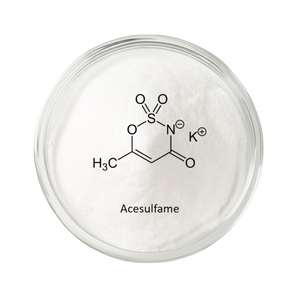
High-purity crystalline powder optimized for rapid dissolution in liquid formulation tanks and beverage manufacturing.
Cost-effective B2B bulk sweetener grade designed for large-scale bakery, sauce, and dairy application lines.
Thermally stable non-caloric sweetener offering exceptional shelf stability and zero-carbohydrate sweetness profile.
Ultra-pure monograph-compliant crystalline Ace-K optimized for precision pharmaceutical and dietary supplement formulations.
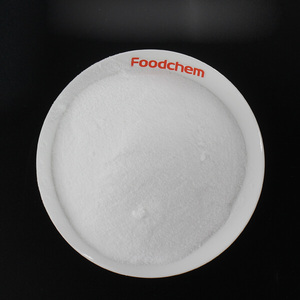
Fully compliant with US Pharmacopeia and European Pharmacopeia standards for multinational food export brands.
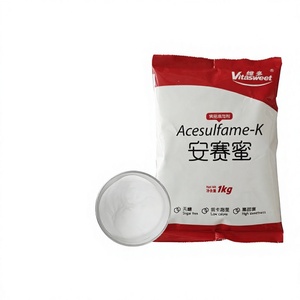
Engineered specifically for thermal resistance during high-temperature baking and sugar-free candy boiling.
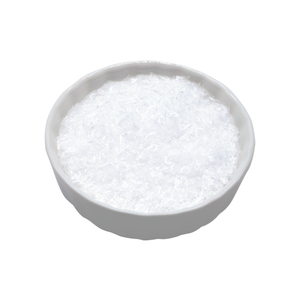
Micronized particle distribution designed for dry blend beverage mixes, tabletop sachet packaging, and protein powder formulations.
Full traceability direct manufacturer export stock backed by lot-specific COA, non-GMO, and REACH/CE compliance dossiers.
Acesulfame Potassium (chemically designated as potassium 6-methyl-2,2-dioxo-2H-1,2,3-oxathiazin-4-olate; CAS 55589-62-3, E-number E950) represents a cornerstone in modern high-intensity sweetener (HIS) architecture. As a synthetic, non-caloric cyclic derivative of acetoacetic acid, Acesulfame-K provides approximately 200 times the sweetness of sucrose while exhibiting remarkable chemical inertness, pH stability across acidic and basic processing environments, and exceptional thermal degradation tolerance up to 225°C.
For industrial food scientists, beverage formulators, and procurement managers, securing a reliable, CE-certified Acesulfame Potassium manufacturer is critical to maintaining batch-to-batch consistency, regulatory compliance, and sensory stability in sugar-reduced products. Unlike aspartame, which hydrolyzes under acidic or high-heat conditions, or natural steviol glycosides, which often suffer from lingering licorice-like bitterness and delayed sweetness onset, Ace-K delivers a rapid sweetness profile with crisp release, making it the preferred blending partner across global food and beverage manufacturing operations.
To assist technical R&D and QA teams in evaluating ingredient suitability, the data visualization below contrasts Acesulfame Potassium against leading high-intensity alternatives under standard commercial food processing parameters:
| Parameters / Characteristics | Acesulfame Potassium (E950) | Sucralose (E955) | Aspartame (E951) | Steviol Glycosides (Reb A) |
|---|---|---|---|---|
| Sweetness Power (vs Sucrose) | 200x | 600x | 180x - 200x | 250x - 300x |
| Thermal Stability (Max Temp) | Excellent (up to 225°C) | Good (up to 120°C - 180°C) | Poor (Hydrolyzes > 80°C) | Excellent (up to 200°C) |
| pH Stability Range | Broad (pH 3.0 - 7.5) | Broad (pH 2.5 - 7.5) | Narrow (Optimal pH 4.2) | Broad (pH 2.0 - 8.0) |
| Sweetness Onset Profile | Immediate, Clean Onset | Slightly Delayed, Lingering | Clean, Moderate Onset | Delayed Onset, Bitter Finish |
| Synergy Factor | High (Strong blend boost) | High with Ace-K / Aspartame | High with Ace-K | Moderate with Ace-K & Erythritol |
| Caloric Contribution | 0 kcal/g (Non-metabolized) | 0 kcal/g (Non-metabolized) | 4 kcal/g (Minimal impact) | 0 kcal/g (Non-metabolized) |
Our manufacturing facility utilizes advanced closed-loop synthesis pathways for Acesulfame Potassium production, converting acetoacetamide-O-sulfonic acid via fluorosulfonyl isocyanate or sulfur trioxide derivatives into the high-purity cyclic potassium salt. Key quality control metrics enforced during synthesis include strict trace removal of organic volatile impurities (OVIs), heavy metal mitigation via sub-micron filtration, and precise control over particle crystallization.
We bridge the gap between high-volume bulk chemical manufacturing and stringent international quality assurance standards.
Eliminate middleman markups. We operate scaled synthesis lines capable of multi-thousand metric ton annual output, ensuring competitive B2B pricing and supply stability.
Every batch ships with comprehensive Certificate of Analysis (COA), ISO22000, FSSC22000, Kosher, Halal, and non-GMO certification documentation required by QA auditor teams.
Strategic export hubs located near major deep-water ports allow rapid dispatch via FCL, LTL, and palletized air freight with palletized stretch-wrapped packaging protection.
A major trend shaping modern beverage formulation is the systematic phase-out of single-sweetener systems in favor of synergistic high-intensity sweetener (HIS) blends. When combined with Sucralose in a 1:1 or 1:3 ratio, Acesulfame Potassium exhibits a non-linear sweetness synergy that increases overall sweetness potency by up to 30% compared to mathematically predicted additive values.
Furthermore, this combination neutralizes the lingering aftertaste inherent to high concentrations of Sucralose while masking the minor metallic notes of Ace-K at higher usage levels. In zero-sugar carbonated soft drinks (CSDs), energy drinks, and flavored hydration waters, this Ace-K blend strategy yields a sensory mouthfeel profile virtually indistinguishable from 11% sucrose solutions.
Global food manufacturing procurement executives are increasingly moving away from spot-market purchasing toward structured 12-to-24-month contract supply frameworks. Key market drivers include:
While historically dominated by beverage applications, procurement demand for heat-stable Acesulfame Potassium is growing exponentially across new sectors:
Key technical, regulatory, and logistics answers for raw material buyers and quality assurance managers.
Our standard MOQ for direct factory export begins at 1 full pallet (1,000 kg / 40 drums or cartons of 25kg each). For customized packaging or OEM private labeling, MOQs are typically structured around full container loads (20' FCL holding approximately 18,000 kg palletized or 20,000 kg unpalletized).
Every lot shipped from our manufacturing plant includes a full Lot-Specific Certificate of Analysis (COA) confirming purity assay (99.0%-101.0%), loss on drying, heavy metals, mesh size, and microbiological control limits. Additionally, we provide MSDS/SDS, Kosher, Halal, ISO22000, FSSC22000 certificates, and a non-GMO declaration for regulatory approval.
Acesulfame-K is an exceptionally stable non-hygroscopic chemical compound. When stored in its original unopened packaging (25kg fiber drums or double PE-lined cardboard boxes) in a cool, dry, well-ventilated warehouse away from direct sunlight and incompatible strong oxidizing agents, it maintains an officially documented shelf life of 36 to 60 months.
We supply three primary mesh size ranges: 20-40 mesh (coarse granular for dust-free pneumatic handling and direct compaction), 80-100 mesh (standard fine powder for fast dissolution in liquid batch tanks), and 135+ mesh (micronized ultra-fine powder for smooth dry sachet blending and chocolate applications).
Acesulfame Potassium is a synthetically produced high-intensity sweetener. Under USDA NOP (National Organic Program) and EU Organic regulations, synthetic non-nutritive sweeteners are not permitted for use in certified 100% Organic food products. However, it is widely utilized in sugar-free, low-carb, keto, and "made with organic ingredients" formulation categories where non-caloric additives are allowed by local regulatory frameworks.
We routinely support FOB (Free on Board) primary Chinese ocean ports (e.g., Qingdao, Shanghai, Ningbo), CIF (Cost, Insurance, and Freight) to major international destinations, CFR, and DDP (Delivered Duty Paid) arrangements for qualified enterprise buyers with established credit facilities.
Need a verified COA, technical specification sheet, or volume spot quotation for your production line? Our chemical application engineers and export logistics team are ready to assist.