
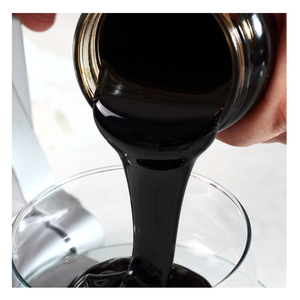
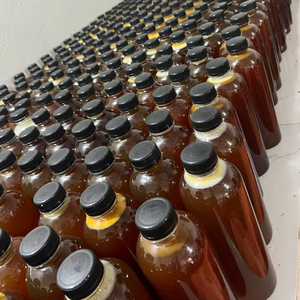
Thick Sugarcane Molasses Suitable for Fermentation & Agriculture
- Total Sugars: ≥ 48.0%
- Brix Density: 79.5° - 83.5°
- Packaging: 250kg Drum / IBC Tote
Direct allocations from integrated cane refiners and extraction laboratories. Certified under strict EU standards with full analytical Certificates of Analysis (COA) per production run.
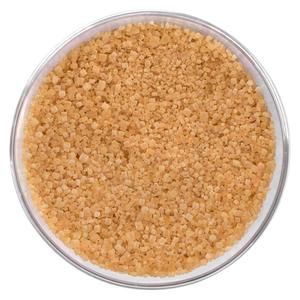


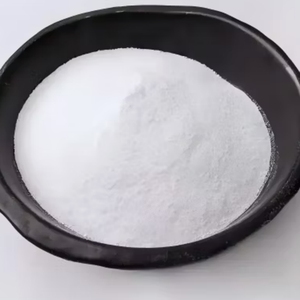
Industrial raw cane sugar refinement is fundamentally defined by thermodynamic separation, non-sugar ash reduction, and stringent color mitigation measured against the International Commission for Uniform Methods of Sugar Analysis (ICUMSA) standards. At our partner milling infrastructures, crystallization is carried out under monitored low-vacuum conditions to limit invert sugar accumulation and ensure crystal morphology remains uniformly cubic.
For international supply agreements entering the European Economic Area and regulated North American processors, our CE and European Food Safety Authority (EFSA) aligned protocols address the full processing continuum. This incorporates systematic screening for sulfur dioxide (SO2) levels below strict 10 mg/kg thresholds, elimination of genotoxic contaminants, and rigorous microbiological testing ensuring total aerobic plate counts remain well under 200 CFU/g.
Whether deploying High Polarization (VHP) raw cane feedstock for continuous liquid inversion or producing ICUMSA 45 white crystalline grades for direct dosing in high-shear carbonated beverage streams, our continuous centrifugal washing and multi-stage fluidized bed drying prevent moisture retention and subsequent lumping in bulk transoceanic transit.
| Refining Parameter | Standard Raw (VHP) | CE Certified Refined | Analytical Method |
|---|---|---|---|
| Polarization (°Z) | 99.20° to 99.50° | ≥ 99.80° Z Min | ICUMSA GS2/3-1 (2011) |
| Color Index | ICUMSA 600 – 1200 | ≤ 45 ICUMSA Units | ICUMSA GS2/3-9 (Spectro) |
| Conductivity Ash | ≤ 0.15% m/m | ≤ 0.04% m/m | ICUMSA GS2/3-17 |
| Moisture (Loss on Dry) | ≤ 0.12% m/m | ≤ 0.04% m/m | ICUMSA GS2/1/3/9-15 |
| Invert Sugar Assay | ≤ 0.10% m/m | ≤ 0.04% m/m | Lane & Eynon Volumetric |
| Heavy Metals (Pb/As) | ≤ 0.5 mg/kg | ≤ 0.1 mg/kg Max | ICP-MS Inductively Coupled |
Procuring industrial sugars and specialized sweetening extracts requires eliminating middle-tier brokerage exposure. Our integrated factory-to-silo logistics ensure uninterrupted material flow for major food manufacturing and fermentation corridors.
Secured volume allocations directly from major domestic and international sugar mills isolate our clients from seasonal crushing bottlenecks, harvest variations, and spot-market physical supply pinches.
Every shipment is audited under ISO 22000, FSSC 22000, CE standards, and GMP conditions. Full chemical assays, non-GMO validations, allergen matrices, and Kosher/Halal certifications travel directly with your manifest.
Strategic warehousing assets positioned adjacent to major shipping ports and transportation corridors allow prompt order releases in days rather than weeks, preventing downtime across automated packaging lines.
Tailored packaging architectures ranging from 50 lb moisture-barrier multi-wall kraft bags, 2,000+ lb discharge-spout FIBC supersacks, to 275-gallon IBC totes and dedicated road tankers with positive pump connections.
Our food scientists assist your R&D teams with Brix-acid balancing, water activity reduction, crystallization dynamics, freeze-thaw stabilization, and non-sucrose bulking replacement matrices.
High-speed automated dry bagging and liquid filling stations support customer-branded specifications, precise barcode indexing, and custom palletizing configurations for global retail and foodservice distributors.
The global sugar and sweetener complex is experiencing structural realignment driven by climate-resilient agriculture, algorithmic hedging against commodity volatility, and accelerating clean-label formulations.
As ICE Sugar No. 11 world contracts and No. 16 domestic benchmarks encounter heightened fluctuations driven by ENSO meteorological patterns, corporate buyers are pivoting away from unprotected spot transactions. Modern supply agreements integrate formula pricing structures pegged to forward refining indexes, incorporating programmatic volume collars and corridor call options that lock in predictable floor-to-ceiling landed ingredient costs across multi-year contracts.
The EU Carbon Border Adjustment Mechanism (CBAM) and corporate Scope 3 GHG disclosures are imposing unprecedented transparency mandates onto cane field operations and transport logistics. Refining operations running on bagasse-powered high-efficiency co-generation plants provide substantial carbon intensity reductions. Forward-thinking procurement teams now audit mill boiler efficiencies, water recirculating circuits, and certified sustainable harvesting practices.
Product developers are aggressively counteracting sugar tax liabilities and consumer scrutiny by formulating synergistic hybrid sweetening systems. Replacing pure sucrose with blends of high-purity Trehalose dihydrate, high-reb Steviol glycosides, and prebiotic carrier syrups enables substantial sugar reduction while safeguarding mouthfeel, maillard reaction browning kinetics, and structural humectancy in baked goods and confectionery applications.
Unloading efficiency directly impacts factory overhead. We align packaging formats with your intake infrastructure, whether utilizing pneumatic bulk transport, high-speed bag slitters, or automated metering manifolds.
Constructed with integrated polyethylene liners to resist atmospheric moisture ingress. Palletized at 40 or 50 bags per heat-treated wooden or plastic slip-sheet pallet with heavy-duty stretch film containment.
Heavy-duty woven polypropylene jumbo bags equipped with sanitary bottom discharge spouts, dust-free collection sleeves, and conductive ground threads for automated crane/forklift hopper suspension.
Reinforced steel cages enclosing high-density polyethylene inner tanks with sanitary cam-lock ball valves, perfectly calibrated for direct pumped liquid sucrose, golden syrups, and thick fermentation molasses.
Food-grade stainless steel tanker trucks with dedicated in-transit heating systems and CIP washing protocols, delivering ready-to-pump liquid sucrose and dextrose blends directly into factory holding silos.
Sweetener selection in industrial food processing is dictated by rheological properties, microbiological barriers, and thermal stability rather than mere organoleptic sweetness. In large-scale industrial bakery operations, for example, crystal granulation directly determines fat creaming efficacy, dough spread ratios, and crumb gas retention.
In bio-fermentation and livestock applications, our high-sugar sugarcane molasses provides non-crystallizing fermentable carbohydrates alongside critical trace minerals (calcium, magnesium, potassium), acting as an essential nutrient medium for yeast propagation, ethanol yield maximization, and silage microbial stabilization.
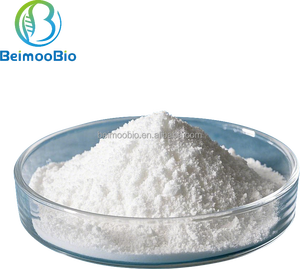
For sensitive pharmaceutical and nutraceutical matrices, trehalose dihydrate acts as an exceptional non-reducing osmoprotectant, shielding active enzymes, therapeutic proteins, and live cultures from denaturing during spray-drying and lyophilization processes.
Precise control over Brix density and clarity prevents beverage turbidity and separation. Our liquid sucrose systems allow metered continuous dosing without dust hazards or dissolving cycle delays.
Engineered invert-to-sucrose ratios govern glass transition temperatures (Tg), preventing unwanted graining in hard candies while guaranteeing smooth mouthfeel in fondants and frostings.
Practical parameters governing minimum order thresholds, chemical testing protocols, export logistics, and storage preservation for enterprise sugar sourcing.
CE-aligned sugar adheres strictly to Regulation (EC) No 852/2004 and associated food safety directives. It guarantees defined maximal thresholds for heavy metals (Lead ≤ 0.1 mg/kg, Arsenic ≤ 0.1 mg/kg), total pesticide residues below EU MRLs, verified sulfur dioxide content (≤ 10 mg/kg), and a complete absence of polycyclic aromatic hydrocarbons (PAH) often found in sub-standard open-flame cane processing.
For standard dry palletized products (such as 50 lb multi-wall bags or 1 MT supersacks), minimum volume starts at one full 20-foot container load (approx. 20–22 Metric Tons). For liquid products delivered in IBC totes, minimum fulfillment is typically 4 to 8 totes. Domestic tanker and pneumatic bulk truck deliveries are coordinated against minimum 45,000 lb scale allocations.
Caking occurs when equilibrium relative humidity (ERH) deviates across thermal transition zones. We minimize free moisture to below 0.04% via fluidized counter-current bed drying, utilize polyethylene inner moisture liners in all bag formats, and deploy container desiccant poles alongside thermal barrier blankets during transoceanic shipping.
Yes. Every single dispatch is accompanied by an extensive Certificate of Analysis (COA) specifying exact polarization, ICUMSA color rating, moisture percentage, ash content, microbial count, and heavy metal screen. Each bag or tote carries lot-number tracking tied to the specific refinery centrifugation run for audit compliance.
We provide tailored granulation grading via rotary mechanical sifting. Options include coarse sanding crystals (0.8–1.2 mm) for baked toppings, standard medium fine granulated (0.4–0.6 mm) for general continuous manufacturing, and ultrafine baker's special or pulverized powdered grades with or without food-grade tricalcium phosphate or cornstarch anti-caking agents.
Commercial structures depend on operational history and contract duration. We support confirmed, irrevocable Letters of Credit (L/C at sight), documentary collections (D/P, CAD), and open account (Net 30/60) credit limits for verified enterprise manufacturers following standard credit underwriting and trade reference verification.