Explore our foundational sugar-refining machinery and carbohydrate derivative solutions designed for continuous, high-yield food and pharmaceutical production.
Maltodextrin ($C_6H_{12}O_6)_n$ stands as one of the most versatile, high-volume polysaccharide hydrocolloids across the global food, beverage, pharmaceutical, and chemical synthesis sectors. Produced via controlled partial enzymatic hydrolysis of non-GMO starch (primarily corn, tapioca, wheat, or potato), maltodextrin consists of D-glucose units linked in chains of variable length, joined primarily by $\alpha$-(1$\rightarrow$4) glycosidic bonds.
China has firmly established itself as the epicenter of global maltodextrin manufacturing, leveraging sophisticated continuous enzymatic cleavage technology, integrated wet-milling infrastructure, and unmatched economies of scale. However, for procurement executives, quality assurance managers, and global formulators, navigating Chinese maltodextrin manufacturers requires a granular understanding of technical specifications—specifically Dextrose Equivalent (DE) value control, dissolution thermodynamics, molecular weight distribution (MWD), and bulk density optimization.
The DE value (Dextrose Equivalent) measures the degree of starch polymer hydrolysis relative to pure dextrose (assigned a value of 100). Maltodextrin is strictly defined by international food standards (FCC/Codex) as having a DE range between 3 and 20. Products exceeding DE 20 are chemically classified as glucose syrup solids, exhibiting drastically different hygroscopic, glass-transition ($T_g$), and sweetening characteristics.
Leading Chinese maltodextrin factories employ state-of-the-art multi-stage bioprocessing pipelines. Understanding this process allows procurement managers to verify vendor quality systems during technical audits:
High-purity native corn or tapioca starch slurry is adjusted to a dry solids concentration of 30–35%. Thermostable $\alpha$-amylase enzymes (derived from optimized Bacillus licheniformis strains) are introduced under precisely controlled pH (6.0–6.5) and temperature ($95^\circ\text{C}$ to $105^\circ\text{C}$). Jet cooking systems instantaneously hydrolyze the linear amylose and branched amylopectin polymers into short-chain oligosaccharides.
Unlike simple acid hydrolysis—which yields unpredictable molecular weight distributions and off-flavors—modern Chinese facilities utilize secondary enzymatic reactions. The reaction is monitored in real-time using high-performance liquid chromatography (HPLC) or auto-titrators. Once the desired DE target (e.g., DE 10–12, DE 12–15, or DE 15–20) is reached, the reaction is abruptly terminated via thermal denaturation or acid inactivation.
The crude hydrolysate passes through active carbon filtration beds to remove residual lipids, proteins, and color compounds (Maillard reaction precursors). Advanced plants employ cross-flow ultrafiltration membranes and multi-bed ion-exchange resins (cation/anion exchangers) to remove micro-minerals and ash, guaranteeing a clarity score above 98% transmittance upon rehydration.
The purified maltodextrin syrup is concentrated via falling-film multi-effect evaporators to 50–60% dry matter. It is then atomized in massive spray drying towers utilizing high-pressure nozzles or rotary atomizers. Air temperature and residence times are micro-adjusted to achieve optimal particle agglomeration, yielding instant-solubility, low-dust, and non-caking powder formats.
Selecting the incorrect maltodextrin DE value leads to formulation failures, such as unexpected moisture pickup, reduced shelf life, unwanted sweetness, or viscosity shifts. Below is the technical breakdown utilized by senior product formulators:
| DE Range | Molecular Weight ($M_w$) | Viscosity & Body | Hygroscopicity | Solubility Speed | Primary Application Areas |
|---|---|---|---|---|---|
| DE 10 – 12 | High (~2,000–3,000 Da) | High Viscosity | Very Low | Moderate | Flavor Encapsulation, Fat Replacers, Infant Formula, Carrier for Sensitive Actives |
| DE 12 – 15 | Medium (~1,500–2,000 Da) | Balanced Body | Low-Moderate | Fast | Sports Nutrition, Meal Replacements, Dehydrated Soups, Spray Drying Aid |
| DE 15 – 20 | Lower (~1,000–1,500 Da) | Low Viscosity | Moderate-High | Instant Clear | Confectionery Glazes, RTD Beverage Powders, Coffee Whitener, Tableting Binder |
| DE > 20 (Syrup Solids) | Low (<1,000 Da) | Minimal Viscosity | High (Hygroscopic) | Instantaneous | Fermentation Substrate, Direct Sweetening, Ice Cream Freezing Point Control |
Strategic purchasing agents must look beyond spot pricing to evaluate long-term structural shifts in the carbohydrate processing industry. Key mega-trends reshaping supply contracts include:
European and North American buyers are increasingly mandating Non-GMO IP (Identity Preserved) corn maltodextrin and enzymatic tapioca maltodextrin. Tapioca-derived maltodextrin is inherently non-GMO, naturally gluten-free, and offers a neutral flavor profile, making it a premium choice for organic food formulations.
Intra-workout supplements and endurance formulations demand high molecular weight, low-DE maltodextrins (or specialty cluster dextrins). Low-DE maltodextrin provides high carbohydrate energy loading without exerting excessive osmotic pressure on the stomach, mitigating gastrointestinal distress during intense physical exertion.
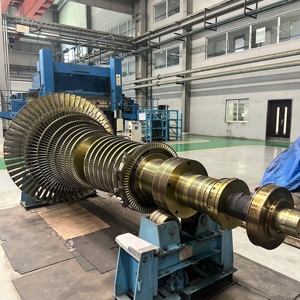
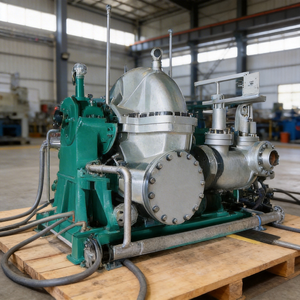
Top-tier Chinese manufacturers are integrating bagasse co-generation steam turbines, energy-efficient high-speed centrifuges, and closed-loop pneumatic transfer systems. By reducing carbon emissions per ton of dry powder, manufacturers meet the ESG (Environmental, Social, and Governance) compliance standards required by global multinational conglomerates.
As a leading supplier and equipment producer, our operational model bridges the gap between bulk commodity supply and rigorous industrial quality assurance. Here is how our production ecosystem guarantees supply chain security:
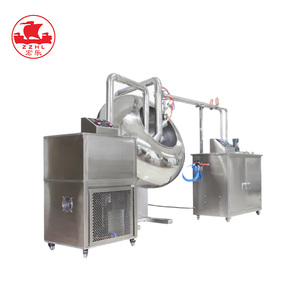
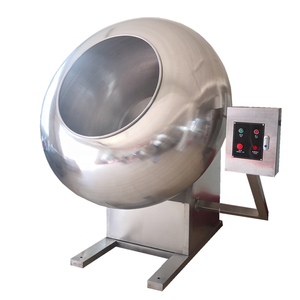
We combine advanced biochemical synthesis with heavy-duty industrial processing hardware to ensure flawless product consistency.
From native non-GMO grain sourcing through jet-cooking atomization to final pallet wrapping, every batch carries a unique lot ID linked to full testing reports.
Need a ultra-low dust coarse granulate or a rapid-dissolving micro-fine powder? Our technical R&D team customizes particle size and dextrose equivalent values to your formula.
Leveraging strategic bonded warehousing and continuous container loading programs, we guarantee predictable ocean and land freight lead times to any global destination.
Clear, direct answers to common questions raised by chemical engineers, QA teams, and global purchasing agents.
Standard full container load (FCL) MOQs typically start at 17 to 20 metric tons (20' GP container palletized). For specialized trial batches, custom DE formulations, or sample evaluations, pallet-level orders (1,000 kg) can be arranged upon technical review.
Our laboratory utilizes the Lane-Eynon volumetric reduction titration method alongside modern High-Performance Liquid Chromatography (HPLC) analysis to quantify reducing sugars calculated as D-glucose on a dry substance basis, enforcing a tight tolerance of ±1.0 DE unit.
Our manufacturing facilities hold ISO9001, ISO22000, FSSC22000, HACCP, Halal, Kosher (Pareve), Non-GMO Project Verification, and USP/EP pharmaceutical excipient compliance documentation.
Tapioca maltodextrin offers a remarkably bland, neutral taste profile with zero cereal off-notes, high clarity upon rehydration, and inherent non-GMO/grain-free positioning. Corn maltodextrin provides exceptional structural bulk, stable viscosity control, and superior cost efficiency for high-volume dry mix formulations.
Standard maltodextrin bulk density ranges from 0.35 g/cm³ to 0.55 g/cm³. High-density grades reduce packaging and shipping volumes, whereas low-density agglomerated grades are engineered for instant dissolution and quick dispersion in cold liquid formulations.
All powder is packed in multi-ply craft paper bags with a high-barrier polyethylene (PE) inner liner seal. We maintain moisture levels strictly below 6.0% and mandate desiccant placement within export containers to withstand humidity and climate zone shifts.
Yes. Low-DE maltodextrin (DE 10–12) is the industry standard carrier for micro-encapsulating flavors, essential oils, probiotics, and botanical extracts due to its high glass transition temperature ($T_g$) and excellent film-forming properties.
Maltodextrin should be stored in unopened original packaging off the floor in a cool, dry warehouse below 25°C (77°F) and under 60% relative humidity. Under these conditions, the shelf life is guaranteed for 24 months from the date of manufacture.