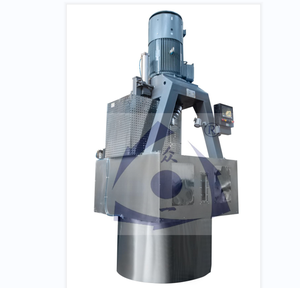
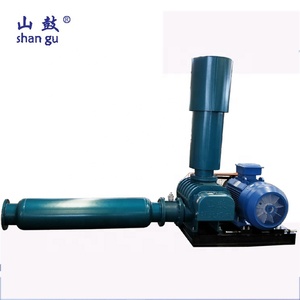
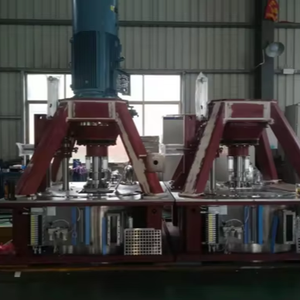
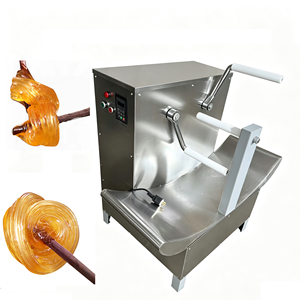
Integrated processing solutions from industrial sugar refining centrifuges to sugar coating turbines and pneumatic bagasse power generation systems.

D-Allulose (also known as D-psicose, C₆H₁₂O₆) is a naturally occurring rare monosaccharide—a C-3 epimer of D-fructose. In modern industrial food chemistry, bulk allulose production is achieved through high-efficiency biotransformation. As a premier China Wholesale Allulose Powder Supplier & Exporter, our facility utilizes non-GMO corn-derived starch hydrolysate (D-glucose), which is enzymatically isomerized to D-fructose and subsequently epimerized at the C-3 position using immobilized D-tagatose 3-epimerase (DTE) or D-psicose 3-epimerase (DPE) enzymes sourced from non-pathogenic, food-grade micro-organisms.
The catalytic equilibrium of D-fructose into D-allulose yields a reaction mixture containing approximately 25% to 35% allulose under optimized thermal conditions (55°C–65°C). To isolate high-purity crystalline allulose powder, our biorefinery applies a rigorous multi-stage separation cascade:
Formulators in bakery, beverage, dairy, and confectionery require detailed thermodynamic and sensory data to replace sucrose seamlessly. Below is an empirical comparison based on HPLC testing and rheological evaluations:
| Physicochemical Parameter | D-Allulose Crystalline Powder | Sucrose (Cane/Beet) | Erythritol | High Fructose Corn Syrup (HFCS-55) |
|---|---|---|---|---|
| Relative Sweetness (Sucrose = 100) | 70% | 100% | 70% | 100% |
| Caloric Value (kcal/g) | 0.2 kcal/g (US FDA standard) | 4.0 kcal/g | 0.0 kcal/g | 4.0 kcal/g |
| Glycemic Index (GI) | 0 | 65 | 0 | 68 |
| Solubility in Water (20°C) | ~70.5 g / 100 g | ~67.0 g / 100 g | ~37.0 g / 100 g | N/A (Liquid syrup) |
| Melting Point Range | 109°C – 112°C | 186°C | 121°C | N/A |
| Maillard Browning Reaction | Highly Active (Faster than Fructose) | Moderate (Requires hydrolysis) | Inert (No browning) | High |
| Freezing Point Depression Factor | 1.9× vs. Sucrose | 1.0× (Baseline) | 2.8× vs. Sucrose | 1.4× vs. Sucrose |
D-Allulose is absorbed in the small intestine but is not metabolised by human hepatic enzymes. Over 70% is excreted unchanged via urine within 24 hours, registering zero net glycemic response.
Unlike erythritol or stevia, allulose possesses a reactive reducing carbonyl group. It reacts with amino acids at lower temperatures (100°C–140°C), producing rich browning and authentic crust aromas in low-carb bakery lines.
Because of its lower molecular weight relative to disaccharides, allulose depresses the freezing point of water nearly twice as effectively as sucrose, producing smooth, scoopable low-calorie frozen desserts without ice crystallization.
Replacing sucrose with bulk allulose powder requires careful calibration of processing parameters, thermal profiles, and water activity ($a_w$). As an experienced exporter, our food science R&D unit provides technical consulting for various industrial manufacturing verticals:
In baked goods, allulose acts as a 1:1 functional drop-in replacement for sucrose bulking. However, due to its high reactivity in Maillard browning reactions, baking temperatures should be reduced by 10°C to 15°C, or baking times reduced by 10% to 15% to prevent hyper-pigmentation of the crust. Allulose also exhibits exceptional humectancy, retaining water bound in protein-starch matrices and extending the soft shelf-life of keto cookies, cakes, and nutritional bars.
In low-sugar ice cream, gelato, and frozen yogurt, allulose solves the hardness issue typical of sugar-free formulations. When combined with high-intensity sweeteners like Monk Fruit Extract or Stevia (Reb M), allulose delivers the exact temporal sweetness curve of cane sugar while controlling scoopability and preventing hard-freeze defects caused by sugar alcohols.
Allulose powder dissolves rapidly in cold liquid batching tanks (~70.5g/100g at 20°C). It imparts full mouthfeel and body without adding syrupy viscosity. In pasteurized beverage processing (HTST or UHT), allulose remains stable across pH levels from 2.5 to 8.0 without degrading into off-flavor degradation products or causing inversion acid spikes.
In gelatin and pectin gummy production, allulose provides clean clarity and prevents moisture migration. In chocolate confections, refined micronized allulose powder (80-100 mesh) can be conched up to 65°C without caramelization, generating smooth meltability and velvety mouthfeel equivalent to premium Belgian cocoa formulations.
The global sugar-reduction landscape is undergoing structural shifts driven by regulatory mandates, consumer metabolic health awareness, and raw material supply chain evolutions. Sourcing managers and procurement directors must align with forward-looking market dynamics:
The US Food and Drug Administration (FDA) issued guidance allowing D-allulose to be excluded from "Total Sugars" and "Added Sugars" counts on Nutrition Facts labels, designating it under total carbohydrates with a 0.2 kcal/g energy assignment. This regulatory green light has positioned allulose as the preferred bulk sweetener across North America, accelerating demand across CPG brands.
The European Food Safety Authority (EFSA) and UK FSA are reviewing joint dossiers for D-allulose under Novel Food regulations. Enterprise procurement teams are proactively securing supply agreements with Chinese manufacturers to establish robust supply lines ahead of impending European market clearance.
China's corn refining belt in Shandong and Henan provinces provides an unparalleled cost advantage for raw starch inputs. Recent enzymatic engineering breakthroughs—specifically multi-enzyme cascade bioreactors and genetically optimized enzyme expression systems—have boosted conversion yields while reducing energy consumption per ton by over 18%. Sourcing directly from top-tier Chinese exporters ensures pricing stability against inflation.
We combine raw material access, state-of-the-art enzymatic separation technologies, and stringent quality control protocols to supply global food conglomerates.
Every single production batch undergoes High-Performance Liquid Chromatography (HPLC) testing to certify purity ≥99.0%, accompanied by lot-specific Certificates of Analysis (COA).
Certified under FSSC 22000, ISO 9001, ISO 22000, Kosher, Halal, Non-GMO Project Verified, and manufactured in full accordance with FDA GRAS standards.
We supply standard crystalline powder (30-60 mesh), fine baking powder (80-100 mesh), ultra-fine micronized powder (120 mesh), and liquid allulose syrup (70% DS).
Standard 25kg multi-wall kraft paper bags with food-grade PE liners, 500kg jumbo supersacks, and custom OEM/private label packaging formats.
Direct shipments out of Qingdao, Tianjin, and Shanghai ports with spot container availability, CIF/FOB pricing, and bonded warehouse reserves.
Our application lab assists your formulation scientists with syrup substitution ratios, thermal adjustment curves, and synergistic sweetener blending.
Essential guidance for commercial ingredient buyers, formulation chemists, and supply chain managers.
Our standard wholesale MOQ starts at 1 pallet (1,000 kg / 40 bags of 25 kg each). For full container loads (20' FCL holds ~18 Metric Tons palletized or 20 Metric Tons unpalletized), we offer volume-based pricing discounts.
Dry allulose powder is packaged in 25 kg net multi-wall kraft paper bags with an inner moisture-barrier PE bag. For high-volume automated operations, we supply 500 kg and 1,000 kg FIBC supersacks. Liquid allulose is shipped in 275-gallon IBC totes or bulk liquid tankers.
Yes. Every shipment includes a batch-matched Certificate of Analysis (COA) specifying HPLC Purity, Moisture Content, Heavy Metals (Pb, As, Cd, Hg), Microbiological Assay (TPC, Yeast & Mold, E. coli, Salmonella), Particle Size Distribution, and Specific Optical Rotation.
Allulose has significantly higher digestive tolerance than polyols like sorbitol or maltitol and comparable or better tolerance than erythritol. Because it is absorbed in the small intestine rather than fermented in the colon, it avoids gastrointestinal distress when consumed within typical formulated levels.
Allulose crystalline powder has a shelf life of 24 months from the date of manufacture when stored in unopened original packaging at ambient temperatures (below 25°C / 77°F) and relative humidity under 60%. Keep stored off the floor away from direct sunlight and odor sources.
Yes. We offer custom milling and sieving. Our standard mesh sizes are 30-60 mesh (granular crystal), 80-100 mesh (fine powder for bakery/mixes), and 120+ mesh (micronized powder for chocolate and confectionery coatings).
Factory dispatch to Chinese main ports takes 3 to 5 business days. Ocean transit to US West Coast ports (Los Angeles/Long Beach) takes 14-18 days; US East Coast takes 28-35 days; European main ports (Rotterdam/Hamburg) take 25-30 days.
Click the "Get Catalog" or "Request Sample" button on this page to open an instant chat inquiry with our sales desk. We provide complimentary 500g validation samples along with SDS, Technical Data Sheets (TDS), and regulatory statements.
Partner with China's leading enzymatic sweetener manufacturer. Contact our export sales team for contract pricing, sample dispatch, and complete technical documentation.
Get Catalog