Direct supply from China's premier crystallization plants. Certified food-grade and pharmaceutical-grade dry sugar solids manufactured under strict ISO22000, FSSC, Kosher, and Halal guidelines with lot-specific COA verification.
In global industrial food manufacturing, beverage formulation, pharmaceutical excipient engineering, and commercial baking, sugar solids represent the baseline dry carbohydrate matrix that dictates structural mouthfeel, glycemic response, osmotic pressure, and Maillard browning dynamics. China has emerged as the premier manufacturing powerhouse for refined sugar solids, leveraging vertically integrated starch hydrolysis facilities, state-of-the-art chromatographic separation systems, and advanced crystallization technologies.
Engineered dry sugar solids encompass a broad spectrum of mono-, di-, and oligosaccharides, as well as hydrogenated polyols and rare sugars. Formulators must select precise sugar solid specifications based on dextrose equivalent (DE), solubility curves, glass transition temperatures ($T_g$), and equilibrium relative humidity (ERH) to prevent caking, optimize dissolution kinetics, and ensure shelf-life stability.
| Sugar Solids Classification | Purity / Standard Grade | Relative Sweetness (Sucrose=100) | Melting Point (°C) | Hygroscopicity Index | Primary Industrial Utility |
|---|---|---|---|---|---|
| Dextrose Monohydrate | ≥99.5% Purity (DE ≥99.5) | 70 - 75 | 83 - 86 | Moderate | Fermentation substrate, bakery browning, sports nutrition powder. |
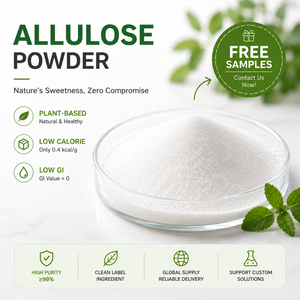
| D-Allulose Crystalline | ≥99.0% High Purity Polyol | 70 | 109 - 112 | Low-Moderate | Zero-calorie keto formulations, caramelization, ice cream depression. |
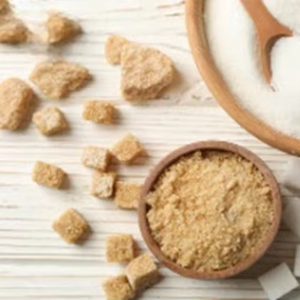
| Raw Cane Sugar (VHP 1000) | ICUMSA 600 - 1200 / Pol >99.2° | 95 - 100 | 186 | Moderate-High | Refining feedstock, direct confectionery, specialty brown sugar bases. |
| Isomalt Powder | ≥98.5% (GPS+GPM mixture) | 50 - 60 | 145 - 150 | Extremely Low | Hard-boiled sugar-free candy, pan coating, moisture barrier decoration. |
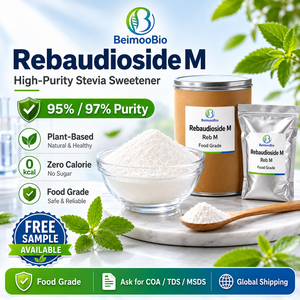
| Stevia Reb M Extract | ≥95.0% Enzymatic Glycoside | 35,000 - 45,000 | 198 - 202 | Low | Zero-sugar beverage concentrate, table-top blend intensity booster. |
| Maltodextrin Solids | DE Range 10 - 20 | 10 - 20 | Variable | Moderate | Spray-drying carrier, encapsulation matrix, viscosity builder. |
Understanding the micro-crystalline polymorphs of dry sugar solids is critical for automated bulk handling systems. High-purity Dextrose Monohydrate features an alpha-anomer crystalline lattice containing one molecule of water of crystallization per molecule of glucose ($C_6H_{12}O_6 \cdot H_2O$). This moisture bound structure releases water at temperatures exceeding 50°C, requiring precise pneumatic transport temperatures during factory conveying.
Our manufacturing complex represents the pinnacle of modern carbohydrate processing, operating continuously to convert non-GMO corn, cassava, and sugar cane feedstocks into ultra-pure refined sugar solids. By combining high-efficiency enzymatic conversion with continuous simulated moving bed (SMB) chromatography, our production facilities achieve industry-leading purity thresholds while minimizing energy consumption and carbon intensity.
Utilizing industrial multi-column SMB systems to isolate monomolecular sugars like Allulose and Dextrose at ≥99.0% chromatographic purity, eliminating off-flavor trace oligosaccharides.
Fully certified under FSSC22000, ISO9001, BRCGS Grade AA, Kosher Pareve, and Halal. Every batch undergoes rigorous heavy metal, pesticide, and microbiological testing.
Precision air-jet milling and multi-deck sifting allow customized mesh sizes (20 mesh coarse granules to 100 mesh extra-fine powders) packaged in anti-caking PE-lined supersacks.
To support global supply chain continuity, our facility maintains multi-site dry storage warehousing capability with over 50,000 MT of buffer inventory. This buffer architecture shields international buyers from mill harvest seasonal fluctuations and shipping logistics bottlenecks, ensuring containerized orders dispatch within 48 to 72 hours from purchase order confirmation.
The global industrial sweetener landscape is undergoing a structural paradigm shift. Driven by worldwide sugar reduction mandates, front-of-pack nutrition labeling regulations, and changing consumer preferences for functional carbohydrates, enterprise procurement leaders must re-align their raw material sourcing strategies over the next decade.
Regulatory greenlights in North America, Latin America, and Asia are accelerating demand for non-glycemic rare sugars. Crystalline Allulose solids provide 70% of sucrose sweetness with zero caloric load, enabling 1:1 sugar replacement in bulk baking without sacrificing depression freezing point in frozen desserts.
Procurement teams are moving away from single-ingredient sweetening. Formulators blend high-intensity natural extracts (Stevia Reb M, Monk Fruit Mogroside V) with functional bulk solids (Maltodextrin, Isomalt, Dextrose) to create synergy between sweetness intensity, temporal profile, and solids density.
Rising cross-border maritime freight rates and energy costs for liquid tank heating have boosted international preference for dry sugar solids. Importing 25kg bags or 1,000kg supersacks of Dextrose or Sucrose solids eliminates ocean shipment of water weight, drastically reducing carbon footprint per unit sweetness.
Commercial buyers are increasingly specifying VHP (Very High Polarization) raw cane sugar solids and USDA Organic certified golden sugar granules. Minimal chemical processing and traceable origin verification have become imperative for premium brand equity.
As food technology advances, Chinese exporters are pioneering continuous crystallization and enzymatic isomerisation techniques that drop production overhead for rare sugars like Allulose down toward commodity dextrose pricing levels. Partnering with a technologically agile factory guarantees access to these next-generation sweetener platforms before market saturation.
Detailed technical and commercial answers curated by our Senior Supply Chain Specialists and Food Science Engineers to streamline your factory audit and procurement process.
Dry sugar solids offer distinct logistics advantages including lower shipping costs (eliminating water payload transport), extended shelf-life (24–36 months under ambient storage), zero risk of microbial growth in pipelines during static holding, and resistance to low-temperature crystallization. However, liquid sugars avoid dry dissolver equipment capital expenditures. Importing solid sugar allows factory operators to hydrate precisely to target Brix specifications on-site.
ICUMSA (International Commission for Uniform Methods of Sugar Analysis) measures sugar color via spectrophotometry at 420 nm wavelength. Lower ICUMSA values indicate higher refinement and lower residual color/ash. Refined white granulated sugar typical boasts an ICUMSA of 45 or lower. In contrast, VHP raw cane sugar ranges between ICUMSA 600 and 1200, retaining natural molasses components beneficial for flavor depth and caramel production.
Our standard manufacturing MOQ for containerized maritime shipment is 1x20' FCL (Full Container Load), which accommodates 20 to 25 Metric Tons depending on product bulk density and packaging layout (e.g., 20 MT palletized in 25kg multi-ply kraft bags or 22 MT in 1,000kg supersacks). LTL sample trials and air freight dispatches are available for testing and QA line trial audits.
Hygroscopic powders such as Dextrose Monohydrate and Allulose are packed in heavy-duty 3-ply kraft paper bags lined with food-grade high-density polyethylene (HDPE) inner barrier bags, heat-sealed under vacuum or dry nitrogen flushes. Container loads are fitted with industrial desiccant poles (minimum 2kg absorption capacity per pole) and thermal container liners to prevent condensation drop during equatorial maritime transit.
Yes. Our sifting line utilizes air-classifier milling to produce tailored mesh profiles. We offer coarse granulations (20–40 mesh) for dusting and slow dissolution applications, standard fine (60–80 mesh) for general beverage dosing, and micro-milled powders (100–120 mesh) for dry mix bakery batters and chocolate processing.
Every commercial lot is accompanied by a batch-specific Certificate of Analysis (COA) detailing Purity %, Moisture Content %, Heavy Metal Scan (Lead, Arsenic, Cadmium), Microbiological Limits (TPC, Yeast & Mold, Salmonella, E. Coli), Mesh Distribution, and Specific Optical Rotation. Upon request, we provide SDS, Allergen Declarations, Non-GMO Statements, and Kosher/Halal Certificates.
Our raw cane sugar formulations track the Intercontinental Exchange (ICE) NY #11 and London #5 sugar futures, combined with spot freight rates. Corn-derived starch sweeteners (Dextrose, Maltodextrin, Sorbitol) are cost-indexed against regional starch feedstocks. We offer both spot-market container pricing and long-term annual supply contracts with locked-in quarterly indexing.
When stored in un-opened original packaging in a climate-controlled warehouse below 25°C (77°F) and relative humidity under 60%, polyol solids such as Isomalt, Erythritol, and Sorbitol have an official shelf life of 36 months. Pallets must be elevated off concrete flooring and kept isolated from volatile aromatic compounds.
Absolute transparency and customized packaging are core factory strengths. We offer private labeling in 1kg retail pouches, 5kg food-service bags, 25kg multi-wall bags, and 1000kg supersacks featuring full-color high-definition flexographic printing, custom lot tracing QR codes, and multi-lingual ingredient declarations compliant with FDA, EU, and FSANZ regulations.
We provide complimentary 500g sample sets for R&D evaluation and pilot plant testing. Samples ship via international express courier (DHL/FedEx/UPS) within 24 to 48 hours of application approval, accompanied by technical specification sheets and lot COA. Technical consultation with our food application engineers is available via teleconference to assist with formulation trial troubleshooting.
Connect with our technical export division to receive comprehensive spec sheets, analytical COAs, tier-volume bulk pricing, and custom mesh availability for your target delivery port.