
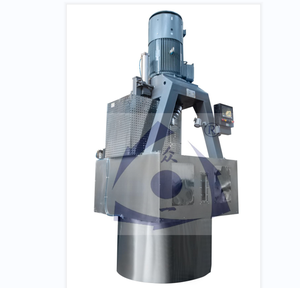
Our industrial factory integrates advanced enzymatic transglucosylation equipment with high-speed separation, crystallization, and coating machinery to deliver uncompromised purity and optimized particle size distribution.
Unlike sugar brokers or third-party re-packagers, our integrated manufacturing plant holds complete operational authority over enzymatic conversion, multi-stage crystallization, sieving, and global logistics execution.
We convert non-GMO sucrose into isomaltulose (palatinose) via enzymatic rearrangement, followed by precision catalytic hydrogenation to yield pure hydrogenated isomaltulose (Isomalt E953).
From micro-fine powder (PF grade < 100 microns) for chocolate and direct compression tablets to coarse granules (ST/C grade 0.5–2.0mm) for hard-boiled candies, we match your exact physical specs.
Every lot is processed under ISO22000, FSSC22000, GMP, Kosher, and Halal protocols. Integrated heavy metal, microbiology, and Karl Fischer moisture testing accompany every Certificate of Analysis.
We supply 25kg multi-wall paper bags, 1,000kg supersacks, and custom private-label packaging. Multi-site warehousing guarantees quick-ship dispatch without long factory lead-times.
Isomalt (hydrogenated isomaltulose, CAS No. 64519-82-0, E953) is an equimolar mixture of two disaccharide alcohols: 6-O-α-D-glucopyranosyl-D-sorbitol (1,6-GPS) and 1-O-α-D-glucopyranosyl-D-mannitol (1,1-GPM). Unlike monomeric sugar alcohols such as erythritol or sorbitol, Isomalt exhibits unique physical properties that closely mimic sucrose while offering distinct thermal, moisture, and physiological advantages for industrial applications.
One of Isomalt’s primary formulatory advantages is its extremely low hygroscopicity. At relative humidity (RH) levels up to 85% at 25°C, Isomalt absorbs virtually no atmospheric moisture. This eliminates surface tackiness and cold flow in hard-boiled sugar-free confectionery, allowing products to achieve an exceptional shelf life without requiring expensive moisture-barrier overwraps.
| Polyol / Carbohydrate | Relative Sweetness (Sucrose = 1.0) | Caloric Value (kcal/g) | Melting Point Range (°C) | Hygroscopicity Threshold (RH at 25°C) | Glycemic Index (GI) |
|---|---|---|---|---|---|
| Bulk Isomalt (OEM Grade) | 0.50 – 0.60 | 2.0 | 145°C – 150°C | Very Low (< 85% RH) | 2 – 9 |
| Sucrose (Refined Sugar) | 1.00 | 4.0 | 160°C – 186°C | Moderate (< 65% RH) | 65 |
| Maltitol (Crystalline) | 0.90 | 2.1 | 145°C – 150°C | Moderate (< 75% RH) | 35 |
| Erythritol | 0.70 | 0.2 | 119°C – 123°C | Very Low (< 90% RH) | 0 |
| Sorbitol | 0.60 | 2.6 | 95°C – 98°C | High (< 50% RH) | 9 |
Furthermore, Isomalt’s high thermal and chemical stability prevents non-enzymatic browning (Maillard reaction) and caramelization during high-temperature cooking (up to 160°C–180°C). This allows food formulators to achieve brilliant color clarity, perfect flavor release, and exceptional transparency in clear hard candies, cough drops, and pan-coated dragées.
As consumer demand shifts toward reduced-calorie, non-cariogenic, diabetic-friendly, and keto formulations, enterprise procurement teams must navigate evolving supply chain and technical benchmarks.
Global procurement teams are moving away from mixed-origin starch sweeteners toward non-GMO sugar beet and non-GMO cane sources. OEM buyers demand certified sugar-beet derived Isomalt backed by strict DNA-negative PCR testing to clear European and North American clean-label auditing standards.
Pharmaceutical and nutraceutical tablet manufacturing is transitioning from wet granulation to direct compression. Procurement contracts increasingly prioritize OEM suppliers who can supply specialized micronized Isomalt powders (PF grade, 20–50 microns) with tailored bulk density and flowability index to reduce binder usage.
To hedge against regional crop fluctuations and high energy tariffs, major food conglomerates are establishing long-term volume agreements directly with primary Asian OEM synthesis plants that feature integrated biomass energy generation (such as bagasse power generation) to maintain fixed cost baselines.
The successful deployment of bulk Isomalt in high-output manufacturing lines depends heavily on the harmonious integration between raw material particle chemistry and automated processing equipment. Standard sugar processing equipment often requires specific adjustments when switching from sucrose to hydrogenated polyols.
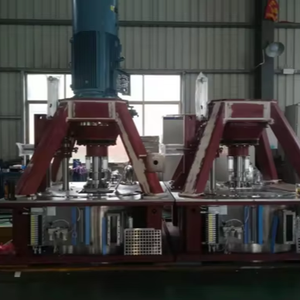
During the crystallization phase of Isomalt production, maintaining precise control over mother liquor viscosity and crystal size distribution requires heavy-duty Sugar Industry High-Speed Centrifuges (501-1000L/h capacity, constructed from SS316L stainless steel). Continuous centrifugal force separates the 1,6-GPS and 1,1-GPM crystal fractions to achieve optimal stoichiometric ratios for end-user melting kinetics.
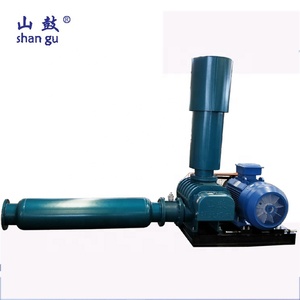
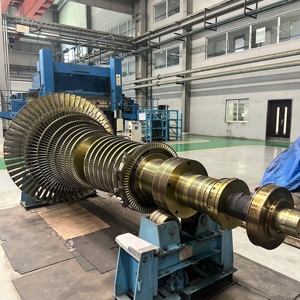
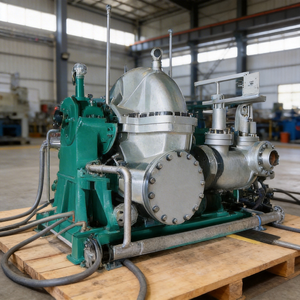
Because coarse Isomalt granules (ST and C grades) are conveyed in multi-ton batching systems, sugar plants rely on high-capacity Roots Blower Supercharge Pneumatic Conveying Systems. Utilizing dehumidified air loops prevents particle attrition while ensuring dust-free delivery into continuous cooker hoppers.
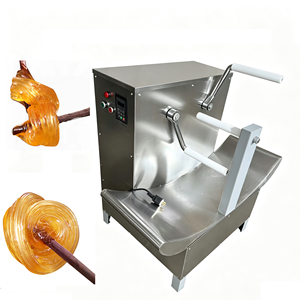
In sugar-free chewy candy, taffy, and satin-finish hard candy production, cooked Isomalt mass must be worked on commercial Candy Sugar Pulling Machines. Pulling incorporates uniform micro-air bubbles into the viscous polyol matrix, producing a silky texture and brilliant opacity without altering the low-hygroscopic surface stability of the final product.
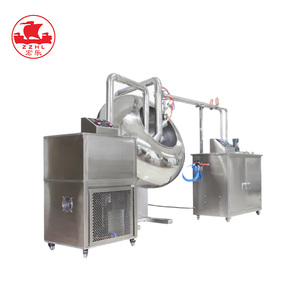
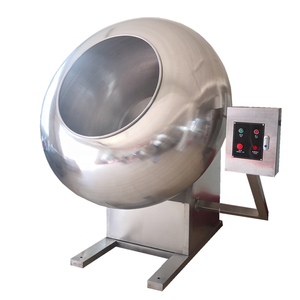
In sugar-free chewing gum, tablet, and nut coating, formulators replace traditional sugar syrups with aqueous Isomalt solutions. Modern Industrial Stainless Steel Coating Turbines with Touch Control enable automated spraying, drying, and temperature profiling, resulting in smooth, durable, and crunch-resistant polyol shells.
Answers to essential technical, logistics, quality control, and formulation inquiries requested by food engineers and procurement managers.
Our standard manufacturing MOQ begins at 1 full pallet (1,000 kg / 40 bags of 25kg each). For custom particle size milling (such as PF micro-powder) or private-label printed bags, the typical MOQ is 5 metric tons (5,000 kg). Full container loads (FCL, 20-22 MT) offer optimal per-kilogram landed freight rates.
Selection depends on your application: Isomalt ST-C / Type C (0.5 – 2.0 mm) is ideal for standard hard candies and continuous cookers; Isomalt ST-M / Type M (0.2 – 0.8 mm) is optimized for bakery toppings and small candies; Isomalt PF / Micronized Powder (< 0.1 mm) is mandatory for chocolate mass, chewing gum dusting, and direct-compression pharmaceutical tablets.
Yes. Every shipment leaves our factory with a comprehensive, lot-traceable COA covering total GPS/GPM assay (> 98.0%), loss on drying / moisture (< 1.0%), optical rotation, heavy metals (Pb, As, Cd, Hg), microbiological standards (TPC, Yeast & Mold, Salmonella, E. coli), and particle size distribution curve.
Isomalt melts between 145°C and 150°C and can be heated up to 160°C–170°C without caramelization or non-enzymatic browning. Because it does not break down into reducing sugars, it retains crystal clarity and structural rigidity, eliminating sticky boiled candy batches.
Yes. Our OEM Isomalt factory holds ISO22000, FSSC22000, US FDA Registration, GMP, Kosher Pareve, Halal, and Non-GMO Project Verification. It fully complies with the specifications of the United States Pharmacopeia (USP), European Pharmacopoeia (EP), and Food Chemicals Codex (FCC).
Absolutely. Because Isomalt possesses roughly 50% to 60% of the sweetness intensity of sucrose with a clean, neutral flavor profile (and zero cooling effect unlike erythritol), it is frequently combined with Sucralose, Stevia, or Acesulfame-K to match the exact sweetness curve of sugar.
We provide 25kg multi-wall paper bags with food-grade PE liners, 500kg/1,000kg polypropylene woven supersacks, and custom-printed multi-wall bags featuring your company's brand, logo, lot coding, and regional language barcode regulatory layouts.
Micronized Isomalt (PF grade) exhibits excellent compressibility, high chemical inertia, and low dilution potential. It acts as an ideal soluble filler-binder for orally disintegrating tablets (ODTs), chewable vitamins, and lozenges where low moisture sensitivity is critical.
Bulk Isomalt should be stored off the floor on clean pallets in a cool, dry warehouse below 25°C (77°F) and relative humidity under 65%. Unopened bags stored under these conditions have an extended shelf life of 36 to 60 months due to Isomalt's exceptional chemical stability.
Standard stocked grades (ST-C, ST-M) are dispatched within 3 to 5 business days from our regional distribution warehouses. Custom OEM particle milling or branded packaging production orders typically ship within 10 to 14 days from factory order confirmation.
Request comprehensive technical specifications, custom mesh samples, product catalogs, and direct factory container pricing customized to your production requirements.