As premier China crystalline fructose manufacturers and global exporters, we integrate precision-engineered sweetener extraction machinery with rigorous chemical purity standards (≥99.5%). Explore our advanced processing equipment and food-grade carbohydrate solutions below.
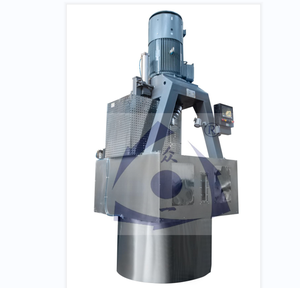
Heavy-duty SS304/316L liquid-solid separation centrifuge designed for high-purity fructose crystal dewatering and syrup clarification.
Contact Us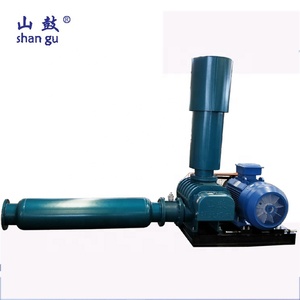
High-efficiency positive displacement Roots blower engineered for hygienic, dust-free pneumatic conveying of crystalline fructose powder.
Contact Us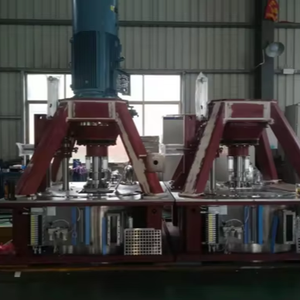
High-productivity syrup separation centrifuge optimizing mother liquor recovery in crystalline fructose crystallization loops.
Contact Us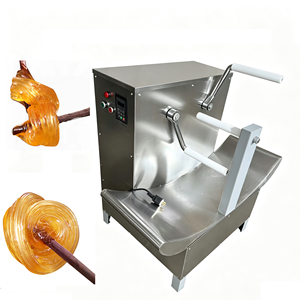
Precision mechanical sugar puller tailored for aerating high-fructose confectionery masses, aerated candies, and chewy sweets.
Contact Us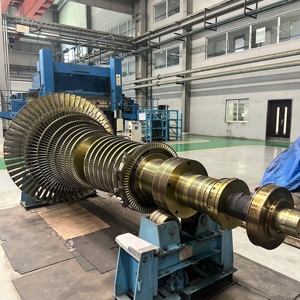
Thermal energy cogenerating power plant system enabling zero-carbon green energy production for large-scale starch & fructose refineries.
Contact Us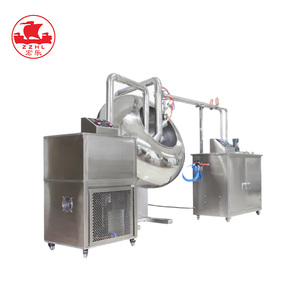
Stainless steel pan coating turbines engineered for uniform fructose film spraying, chocolate enrobing, and pharmaceutical panned tablets.
Contact Us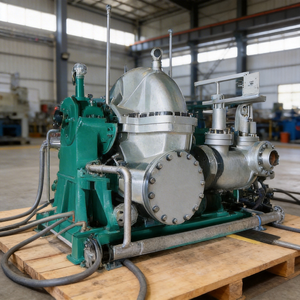
High-capacity steam turbine drive unit for heavy industrial crushers, evaporators, and multi-effect fructose crystallizer vacuum systems.
Contact Us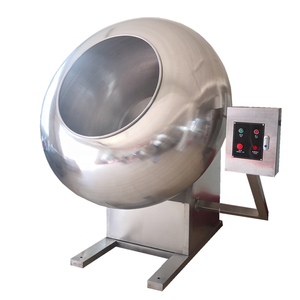
Automated PLC touch-screen pan coater with precise hot air temperature control for specialty crystalline fructose glazes.
Contact UsCrystalline fructose (D-fructose, keto-hexose, CAS No. 57-48-7) represents the pinnacle of modern carbohydrate processing technology. Obtained through the continuous enzymatic hydrolysis of corn starch into dextrose, followed by stereospecific enzymatic isomerization, continuous simulated moving bed (SMB) chromatographic separation, and cooling crystallization, pure crystalline fructose delivers an unmatched sweetness ratio—up to 1.73 times sweeter than sucrose (table sugar) in cold liquid matrices.
From a metabolic and formulation standpoint, crystalline fructose offers an exceptional functional footprint for food scientific applications. Featuring a remarkably low Glycemic Index (GI = 19–23) compared to glucose (GI = 100) and sucrose (GI = 65), it causes significantly lower insulinemic spikes, making it an indispensable bulk sweetener for clinical nutrition, sports endurance beverages, diabetic-friendly formulations, and reduced-calorie consumer products.
| Technical Parameter | FCC / USP / EP Standard Specifications | China Premium Manufacturer Export Grade |
|---|---|---|
| Assay (Dry Basis) | 98.0% – 102.0% | ≥ 99.5% Purity |
| Specific Optical Rotation [α]D20 | -89.0° to -93.5° | -91.0° to -93.5° |
| Loss on Drying (Moisture) | ≤ 0.5% | ≤ 0.15% (Ultra-Low Moisture) |
| Hydroxymethylfurfural (HMF) | ≤ 0.1% (Absorbance ≤ 0.32) | ≤ 0.05% (Absorbance ≤ 0.15) |
| Residue on Ignition (Ash) | ≤ 0.1% | ≤ 0.03% |
| Particle Granulation Range | 10 – 80 Mesh (Customizable) | Fine (40–80 Mesh) / Coarse (16–30 Mesh) |
| Heavy Metals (as Pb) | ≤ 5 ppm | ≤ 0.5 ppm (ICP-MS Tested) |
| Total Plate Count (TPC) | ≤ 1000 CFU/g | < 100 CFU/g (Sterile Cleanroom Packed) |
Partnering with established China crystalline fructose manufacturers offers enterprise procurement buyers distinct supply chain, economic, and operational advantages. Combining state-of-the-art biological fermentation infrastructure with multi-decade industry heritage, our enterprise framework guarantees long-term supply resilience, regulatory compliance, and customized OEM packaging options.
Every shipment carries an exhaustive Certificate of Analysis (COA) detailing HPLC purity, heavy metal ICP-MS scans, microbiological safety, and HMF limits. Full backward traceability guarantees compliance with US FDA, EU EFSA, and international food sanitation codes.
By operating high-capacity continuous chromatographic separation systems and co-generating bio-energy with bagasse steam turbines, our manufacturing facilities eliminate intermediary price markups, offering volume buyers direct mill pricing.
From standard 25 kg moisture-barrier multi-ply kraft paper bags to 1,000 kg PP jumbo supersacks with inner polyethylene liners, we offer complete OEM private labeling, nitrogen flushing, and custom palletization for global export.
The global landscape for industrial sweetener procurement is undergoing structural evolution. As procurement directors navigating the post-2025 supply chain environment prioritize operational efficiency, risk management, and carbon accounting, several critical procurement trends define the market for crystalline fructose:
Due to geopolitical fluctuations in global corn harvests and energy market volatility, international beverage brands and pharmaceutical buyers are transitioning away from spot-market buying toward multi-year index-linked supply contracts. China’s major manufacturers now provide dynamic hedging options anchored to corn futures and ocean freight indices, granting buyers multi-quarter cost predictability.
Multinational food manufacturers (including beverage giants and dairy processors) now mandate carbon footprint disclosure across raw material inputs. Top Chinese refineries lead this shift by incorporating zero-emission bagasse steam turbine generators, closed-loop water recovery circuits, and solar-assisted drying towers to lower product carbon intensity.
Consumer demand for healthy, non-synthetic sweetening solutions has created a surge in high-fructose applications. Because crystalline fructose is a naturally occurring carbohydrate in fruits and honey, it bypasses the consumer backlash faced by artificial high-intensity sweeteners (such as aspartame or acesulfame-K), allowing formulators to achieve zero artificial additive claims.
Because pure fructose is inherently more hygroscopic than sucrose, maritime transit across humid tropical routes traditionally posed caking risks. Next-generation packaging technology—incorporating aluminum-foil vacuum inner barrier liners and desiccant-integrated outer wraps—ensures free-flowing powder performance upon port arrival in North America, Europe, and LATAM.
The industrial synthesis of crystalline fructose in China has progressed from basic batch crystallization to automated continuous systems. Understanding these engineering breakthroughs highlights why Chinese manufacturing plants deliver world-class purity and cost efficiency:
Traditional chemical separation methods yielded low fructose concentrations, requiring excessive thermal energy to evaporate water. Modern Chinese export refineries utilize advanced multi-column Simulated Moving Bed (SMB) chromatography with specialized calcium-form strong acid cation exchange resins. This technology achieves continuous split fractionation of dextrose and fructose at purities exceeding 98% in solution, reducing steam consumption by over 35%.
Fructose exhibits high thermal sensitivity. Exposure to temperatures above 65°C in concentrated aqueous solutions triggers thermal degradation, producing Hydroxymethylfurfural (HMF)—an undesirable byproduct that causes yellowing and off-flavors. Leading Chinese exporters utilize continuous multi-stage vacuum cooling crystallizers operating below 45°C. This yields pristine white, highly uniform crystals with HMF levels strictly below 0.05%.
Different food industrial applications demand tailored particle sizes. Instant powder drinks require micro-fine crystalline fructose (60–80 mesh) for rapid dissolution, whereas bakery glazes require coarse granules (16–30 mesh) to resist ambient moisture absorption. Modern processing facilities employ inline laser diffraction sensors and automated sieving equipment to maintain crystal size distribution uniformity (Cv < 25%).
Below are technical, commercial, and logistical answers to standard inquiries encountered by global procurement managers during supplier evaluation and contract negotiations.
Connect directly with our senior sugar engineering and export logistics specialists. Receive comprehensive technical dossiers, full lot COAs, and competitive CIF/FOB pricing within 24 hours.
Contact Us