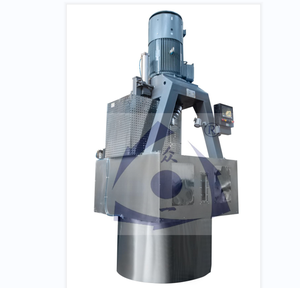
Direct supply solutions, heavy-duty centrifuges, and precision machinery supporting global sugar mills and regional food production plants across Mexico.



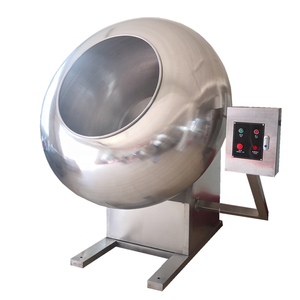
Advanced chromatographic separation ensures pure crystalline beta-D-fructopyranose with consistent mesh sizes tailored for food, beverage, and pharmaceutical processing.
Ideal for formulating reduced-sugar, diabetic-friendly, and functional wellness foods targeting Mexico City’s health-conscious urban demographics.
Streamlined customs clearing through Veracruz and Manzanillo, with dedicated warehousing serving industrial centers in Vallejo, Ecatepec, and Naucalpan.
The industrial food and beverage manufacturing ecosystem within the Valley of Mexico (Zona Metropolitana del Valle de México) represents one of Latin America's highest-density production zones. Operating within this region—encompassing major industrial hubs like Tlalnepantla, Ecatepec, Naucalpan, Vallejo, and Toluca—requires navigating complex ingredient functional parameters, stringent labeling regulations, and distinct geographical climate dynamics. For procurement directors, formulation scientists, and supply chain executives, sourcing Bulk Crystalline Fructose directly from premier primary factories and experienced international exporters is no longer just a purchasing routine; it is a core strategic lever for product differentiation, cost optimization, and compliance management.
Crystalline fructose ($\text{C}_6\text{H}_{12}\text{O}_6$) is a pure, keto-hexose monosaccharide produced through the continuous enzymatic hydrolysis of starch (typically corn or sugar cane), followed by advanced chromatographic separation, concentration, and precision crystallization. Unlike High Fructose Corn Syrup (HFCS 42 or HFCS 55), which contains significant water content and variable ratios of unbound glucose and higher oligosaccharides, Crystalline Fructose yields an anhydrous, high-purity crystalline solid ($>99.5\%$ purity). This functional distinction provides food technologists with unparalleled control over solids formulation, water activity ($a_w$), freezing point depression, and caloric density reduction.
Purity Level: $\ge 99.5\%$ anhydrous $\beta$-D-fructopyranose
Relative Sweetness: 1.2x to 1.8x vs. Sucrose (temperature & concentration dependent)
Glycemic Index (GI): ~19 (Compared to Glucose at 100, Sucrose at 65)
Melting Point: $101^\circ\text{C} - 105^\circ\text{C}$ (undergoes rapid mutarotation upon aqueous dissolution)
Solubility in Water: $375\text{g} / 100\text{g}\text{ H}_2\text{O}$ at $20^\circ\text{C}$ (highest among all crystalline sugars)
Formulating beverages, bakery goods, and dairy products for Mexico City introduces specific thermodynamic and barometric challenges. Situated at an average altitude of 2,240 meters (7,350 feet) above sea level, atmospheric pressure in the Valley of Mexico drops to approximately 77.5 kPa (0.765 atm). This significant decrease in barometric pressure depresses the boiling point of water to approximately $92.5^\circ\text{C}$, directly impacting caramelization rates, Maillard reactions, moisture evaporation rates in baking, and carbonation retention dynamics in liquid beverages.
Mexico's front-of-package labeling regulation (NOM-051-SCFI/SSA1-2010) mandates prominent black octagonal warning seals for products exceeding defined thresholds for calories, added sugars, saturated fats, and sodium. Because pure crystalline fructose exhibits a sweetness intensity up to 1.7 to 1.8 times greater than sucrose in cold, slightly acidic aqueous solutions, food developers can reduce total dry-weight sweetener usage by 30% to 40% without sacrificing sweetness perception.
Furthermore, crystalline fructose exhibits an exceptional sweetness synergy when blended with sucrose, invert sugar, or high-intensity non-nutritive sweeteners (such as Steviol glycosides or Sucralose). When combined with stevia, fructose effectively caps the lingering, bitter liquorice notes of rebaudiosides by providing an immediate, clean onset of sweetness that matches the human palate's natural sucrose profile. This enables beverage plants in CDMX to formulate "exceso calorías" or "exceso azúcares" off their front labels, directly protecting market share and brand equity.
In high-altitude industrial baking (such as pan dulce, galletas, and sliced bread produced in Naucalpan and Toluca plants), lower atmospheric pressure causes rapid moisture loss during cooling cycles, leading to premature staling and textural collapse. Crystalline fructose is highly hygroscopic. It draws and binds free water molecules within the crumb matrix, lowering overall water activity ($a_w$) while preserving crumb softness and extending shelf-life across regional distribution networks without relying on chemical preservatives.
For industrial dairies producing helados, yogurts, and frozen desserts, fructose offers double the freezing point depression capability of sucrose per unit weight due to its lower molecular weight ($180.16 \text{ g/mol}$ vs $342.30 \text{ g/mol}$). This property prevents large ice crystal formation during transport across temperature-fluctuating cold chains in central Mexico, providing a smooth, creamy mouthfeel even in reduced-fat dairy lines.
Deployment: Refrescos, sports drinks, flavored waters, and RTD teas.
Technical Benefit: Rapid dissolution rate; heightens natural fruit flavors (citrus, berry, mango); clean sweetness release at low temperatures without mouth-coating viscosity.
Deployment: Industrial cakes, soft biscuits, fruit fillings, and glazes.
Technical Benefit: Rapid Maillard browning at lower oven temperatures; enhanced crumb moisture retention at high CDMX altitudes; prevents sugar crystallization in high-solids jams.
Deployment: Gummies, jelly candies, hard candies, diabetic nutritional bars.
Technical Benefit: Low GI rating (19) ideal for metabolic wellness trends; superior clarity in pectin/gelatin gummies; synergy with natural fruit concentrates.
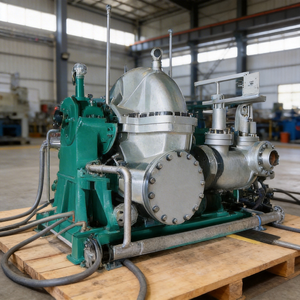
Procuring bulk crystalline fructose for manufacturing plants in central Mexico requires a robust international supply chain architecture. Overseas primary factories utilize high-capacity equipment—such as multi-stage continuous centrifuges, high-pressure roots blowers for pneumatic starch slurry transfer, and dedicated steam turbine co-generation power plants—to maintain strict continuous-crystallization parameters. Once manufactured, the material must be protected against humidity during ocean transit and inland trucking.
Crystalline fructose is highly susceptible to caking if exposed to relative humidity (RH) exceeding 60% at ambient storage temperatures ($>25^\circ\text{C}$). Leading primary exporters utilize multi-wall paper bags with heat-sealed polyethylene inner liners (25 kg standard format) or 1,000 kg woven polypropylene supersacks equipped with moisture-barrier aluminum or PE food-grade liners.
Importing crystalline fructose into Mexico falls under tariff classification HS Code 1702.60.01 (Fructose in solid form, containing in the dry state more than 50% by weight of fructose). Key import clearance prerequisites include:
The manufacturing excellence behind refined sugars and crystalline sweeteners relies on advanced industrial machinery designed for precise thermal separation, energy efficiency, and hygienic bulk handling:
Direct technical and logistical answers regarding bulk crystalline fructose imports, NOM-051 compliance, storage practices, and supply chain scheduling.
Because crystalline fructose is significantly sweeter than standard sucrose (up to 1.7x in cold water formulations), developers can lower total sugar solids required to achieve the desired brix/sweetness profile. Reducing total caloric contribution per 100ml allows beverage formulations to fall below the mandatory threshold for "EXCESO CALORÍAS" and "EXCESO AZÚCARES" warning labels.
Food and pharmaceutical standards require a minimum purity of 99.5% anhydrous $\beta$-D-fructopyranose on a dry basis. Moisture content must remain strictly under 0.05% to prevent hygroscopic agglomeration during transit and storage in industrial warehouses across CDMX.
We recommend 25 kg multi-wall kraft paper bags with an integrated 80-micron heat-sealed polyethylene inner liner, or 1,000 kg supersacks with aluminum barrier liners. This packaging prevents atmospheric moisture absorption during sea passage through Veracruz or Manzanillo and subsequent overland transport to inland container depots in Pantaco/Mexico City.
At CDMX’s elevation (2,240m), lower atmospheric pressure accelerates moisture evaporation during baking. Fructose acts as an exceptional humectant, binding water within dough matrices. However, because fructose lowers Maillard browning temperature thresholds, baking temperatures should be reduced by $5^\circ\text{C}$ to $10^\circ\text{C}$ to prevent premature crust darkening.
When stored in unopened original packaging under cool, dry conditions ($<25^\circ\text{C}$ and $<60\%$ Relative Humidity), crystalline fructose has a shelf life of 24 months. Pallets should remain shrink-wrapped and elevated off concrete floor surfaces to avoid moisture migration.
Yes. Crystalline fructose exhibits significant sweetness synergy with Stevia (Reb A/Reb M) and Sucralose. It masks bitter liquorice off-notes inherent to high-intensity sweeteners, providing a sucrose-identical sweetness curve while drastically lowering total carbohydrate density.
The standard tariff classification is HS Code 1702.60.01. Shipments require a Lot-Specific Certificate of Analysis (COA), Commercial Invoice, Packing List, Bill of Lading, Certificate of Origin, and Sanitary Compliance Declarations under SAGARPA/COPRIS guidelines.
Typical ocean transit from primary overseas factory ports to Veracruz or Manzanillo takes between 18 to 28 days. Customs clearance and inland drayage to Mexico City area warehouses generally require an additional 4 to 7 business days, resulting in a total lead time of approximately 30 to 38 days from booking confirmation.
Connect directly with our international export team for batch COAs, custom packaging options, and delivered pricing (FOB, CIF Veracruz/Manzanillo, or DDP Mexico City).
Send an Inquiry