Advanced sugar mill machinery, centrifuges, thermal generators, and chocolate coating turbines essential for raw sugar refinement, isomalt enzymatic synthesis, and commercial confectionery manufacturing.
As South Africa accelerates reformulations across its food, beverage, and pharmaceutical manufacturing sectors, Isomalt (E953) has emerged as the premier disaccharide alcohol (polyol) for complete sugar replacement. Formed via a two-stage enzymatic conversion of sucrose into isomaltulose (palatinose), followed by catalytic hydrogenation into an equimolar mixture of 6-O-α-D-glucopyranosyl-D-sorbitol (1,6-GPS) and 1-O-α-D-glucopyranosyl-D-mannitol (1,1-GPM), bulk isomalt delivers unprecedented physical stability, thermal resistance, and physiological benefits.
In South Africa’s key industrial hubs—including Johannesburg, Cape Town, Durban, and Gqeberha—food scientists and procurement officers are facing mounting regulatory and market pressures. The enforcement of South Africa's Health Promotion Levy (HPL)—commonly referred to as the sugar tax—has fundamentally reshaped profitability metrics for commercial food and beverage enterprises. Manufacturers require functional sugar alternatives that provide 1:1 bulk volume replacement without disturbing rheological properties, Maillard reaction dynamics, or shelf life.
Information Gain Insight: Unlike high-intensity sweeteners such as Sucralose or Stevia, which provide intense sweetness with zero bulk, Bulk Isomalt provides the structural matrix, mouthfeel, mass, and moisture control of sucrose with only 2.0 kcal/g (50% reduction) and a Glycemic Index (GI) of just 2.
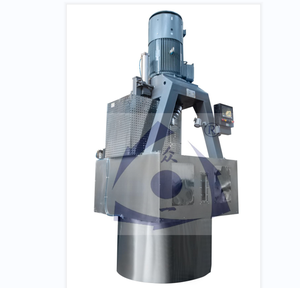
Our China manufacturing facility utilizes state-of-the-art continuous enzymatic crystallization systems integrated with SS304/316L High-Speed Centrifuges (capable of 501-1000L/h processing throughput) to guarantee strict particle size distribution and chemical consistency across every batch shipped to Southern Africa.
| Technical Parameter | Commercial Grade Specs | DC Grade (Direct Compression) | Micro-Powder Grade |
|---|---|---|---|
| Chemical Identification | Hydrogenated Isomaltulose (E953) | Hydrogenated Isomaltulose (E953) | Hydrogenated Isomaltulose (E953) |
| GPS + GPM Content | 98.0% – 102.0% | ≥ 99.0% | ≥ 98.5% |
| Particle Size Mesh | 10 – 40 Mesh (Granular) | 40 – 80 Mesh (Agglomerated) | 100 – 200 Mesh (Fine Powder) |
| Melting Range | 145°C – 150°C | 145°C – 150°C | 145°C – 150°C |
| Hygroscopicity (25°C) | Extremely Low (<1% at 85% RH) | Extremely Low (<1% at 85% RH) | Low (<1.5% at 80% RH) |
| Glycemic Index (GI) | 2 ± 1 | 2 ± 1 | 2 ± 1 |
Achieving superior physical clarity and crispness in isomalt-based sugar-free confectionery requires specialized industrial processing machinery. When handling high-purity isomalt melt masses, viscosity and temperature parameters differ from standard sucrose-glucose blends:
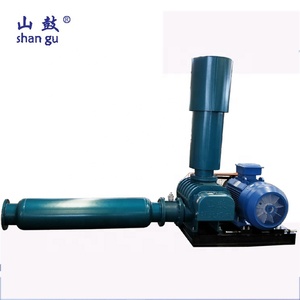
A. Pneumatic Material Handling & Transfer: Bulk isomalt crystalline powders are sensitive to friction-induced static build-up. Employing specialized Sugar Plant Roots Blowers for supercharged pneumatic transfer ensures smooth inline transport from storage silos to cooking vessels without particle fracturing or moisture absorption.
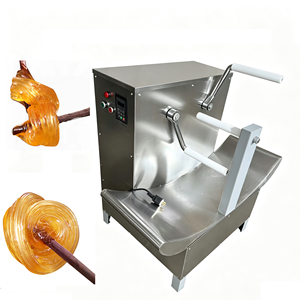
B. High-Viscosity Mass Aeration & Pulling: For pulled sugar products, chewy sugar-free candies, and aerated boiled sweets, our Commercial Candy Sugar Pulling Machines allow precise air incorporation into the cooling isomalt matrix at 90°C–100°C. This creates micro-bubble dispersion, giving hard candies an iridescent satin sheen while maintaining structural rigidity.
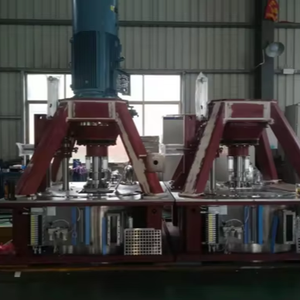
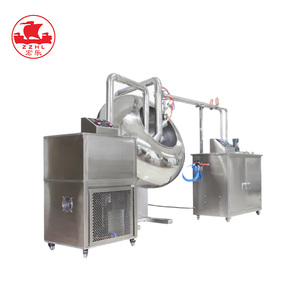
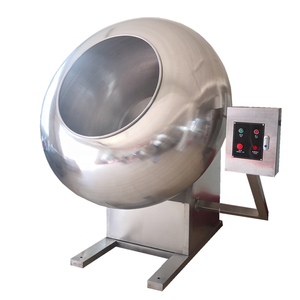
C. Automated Coating & Panning: In chocolate, chewing gum, and pharmaceutical tablet production, Stainless Steel Coating Turbines with Touch Control provide programmable spray rates for liquid isomalt solutions. Because isomalt crystallizes into a glass-like protective barrier without browning, it yields a hard, crunchy coat that resists cracking under South Africa's high humidity coastal conditions.
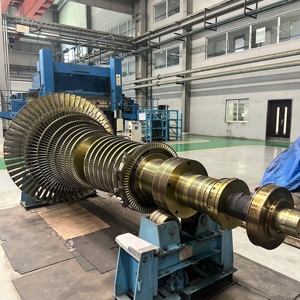
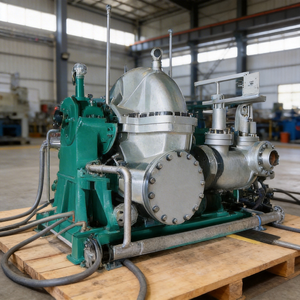
D. Energy-Optimized Thermal Processing: Large-scale processing facilities operating bagasse and steam power generation systems benefit from integrating Steam Turbine Generators (1MW–5MW) to power heavy centrifuge separation units, lowering energy costs per metric ton of refined isomalt produced.
Durban’s high ambient humidity (frequently exceeding 80% RH) makes traditional sugar candies sticky. Isomalt does not absorb water at temperatures up to 25°C and 85% relative humidity, eliminating sticky surfaces, moisture clumping, and enabling extended unwrapped shelf life.
Within Johannesburg's active pharmaceutical manufacturing corridor, direct compression grade Isomalt (DC Grade) serves as a premium non-cariogenic excipient for chewable vitamins, throat lozenges, and pediatric tablets under SAHPRA GMP compliance.
Cape Town's artisanal food manufacturers utilize isomalt for zero-sugar syrups, thermal-stable bakery glazes, and low-calorie craft beverages. Isomalt withstands baking temperatures up to 160°C without caramelizing or scorching.
Leading meat processors use micro-powder isomalt as a functional moisture binder and carrier in spice rubs for biltong and droëwors, preventing premature sugar browning during ambient air-drying processes.
South Africa represents the largest sub-Saharan hub for sugar-free product innovation. Key market forces driving current procurement strategies include:
1. The Health Promotion Levy (HPL): The South African government’s tax on sugary beverages and processed snack foods incentivizes manufacturers to reduce sucrose levels below taxing thresholds. Isomalt acts as a seamless volumetric replacement that prevents mouthfeel degradation.
2. Diabetic Prevalance & Low-GI Movement: With over 4.5 million adults living with diabetes in South Africa, consumer demand for Low Glycemic Index certified foods has surged. Isomalt causes virtually no rise in blood glucose or insulin release (GI: 2, Glycemic Load near 0).
3. SAHPRA & Food Additive Regulatory Approval: Isomalt (E953) is fully approved by the South African Health Products Regulatory Authority (SAHPRA) and compliant with the South African Bureau of Standards (SABS) Codex Alimentarius guidelines. It carries SANHA Halal, NIHT Halal, and Kosher certifications required for distribution across Southern African retail chains (Checkers, Pick n Pay, Woolworths, and Shoprite).
Direct mill integration, continuous crystallization technology, stringent quality assurance, and dedicated shipping logistics to Southern Africa.
We operate fully automated enzymatic transformation plants integrated with bagasse steam cogeneration turbines (1MW-5MW) to achieve maximum energy efficiency and competitive bulk pricing.
Every full container load (20ft FCL / 40ft FCL) ships with a complete Certificate of Analysis covering HPLC purity, heavy metals, microbial limits, and particle mesh validation.
Established freight lanes directly from Qingdao and Tianjin ports to Port of Durban and Cape Town within 18 to 22 transit days, with full customs documentation provided.
Essential answers regarding imports, customs codes, local compliance, packaging options, and processing stability.
Bulk Isomalt is classified under HS Code 2905.49 (Other Polyhydric Alcohols / Hydrogenated Isomaltulose). Import customs clearances at the Port of Durban or Cape Town fall under standard food additive tariff classifications.
Yes. Our Isomalt (E953) meets all Codex Alimentarius specs and complies fully with South African Health Products Regulatory Authority (SAHPRA) guidelines and Department of Health regulations for food additives and sweeteners.
We supply Isomalt in 25 kg multi-wall kraft paper bags with inner moisture-proof PE liners (palletized and stretch-wrapped, 20-22 MT per 20ft FCL) and 1,000 kg heavy-duty industrial supersacks fitted with bottom discharge spouts.
Isomalt features extremely low hygroscopicity. It does not absorb significant ambient moisture up to 85% relative humidity at 25°C, preventing product degradation, sticky hard candies, and clumping during warehouse storage in Durban or Cape Town.
Yes. Isomalt offers 1:1 volumetric substitution for sucrose. Because its sweetness intensity is approximately 50% to 60% of sugar, it is frequently blended with small quantities of high-intensity sweeteners (such as Sucralose) to match exact sugar sweetness profiles.
Yes. Every shipment is accompanied by internationally recognized Halal (SANHA/NIHT compatible) and Kosher certifications, alongside lot-traceable Certificates of Analysis (COA), ISO22000, and FSSC22000 quality audits.
Our standard Minimum Order Quantity for export is 1 metric ton (1 pallet) for sample production trials, up to 20-22 Metric Tons for full container loads (FCL) to achieve optimal shipping cost per kilogram.
Isomalt possesses exceptional thermal stability up to 160°C. It does not undergo Maillard reactions (browning) or caramelization, making it ideal for clear hard candies, delicate glazes, and light-colored bakery products.
Once an order is confirmed, production and container loading take 3-5 business days. Sea freight transit time from Qingdao/Tianjin to Durban Port is approximately 18-22 days, with an additional 3-5 days for inland rail to Johannesburg hubs.
Yes. We offer custom particle sizing including standard granular (10-40 mesh), direct compression agglomerates (40-80 mesh), and micronized powders (100-200 mesh) suited for specific pharmaceutical or food processing equipment setups.
Connect directly with our technical application team to order samples, obtain lot-specific COAs, or request landed container pricing for Durban, Cape Town, or Johannesburg manufacturing sites.