Precision-engineered continuous centrifuges, pneumatic blowers, steam co-generation turbines, and specialized sugar coating equipment built for high-Brix sucrose conversion plants.
Invert sugar syrup has emerged as a cornerstone raw material for the European food, beverage, pharmaceutical, and apiculture sectors. Within Central Eastern Europe (CEE), Hungary occupies a strategically vital position. Situated in the fertile Danube basin with direct access to extensive sugar beet production (traditionally centered around regions like Kaposvár and the Great Hungarian Plain) and a major corn-refining biorefinery infrastructure (such as facilities in Szabadegyháza), Hungary serves as both a primary production hub and an export gateway for liquid sweeteners across Austria, Slovakia, Romania, Serbia, and Croatia.
Modern invert sugar factories in Hungary utilize state-of-the-art thermo-chemical and enzymatic processing lines to cleave disaccharide sucrose ($\text{C}_{12}\text{H}_{22}\text{O}_{11}$) into its constituent monosaccharides: D-glucose (dextrose) and D-fructose (levulose). This hydrolytic process fundamentally changes the physical and chemical behavior of the sweetener matrix, offering higher solubility, reduced water activity ($a_w$), enhanced humectancy, and complete resistance to crystallization at high concentration levels.
The term "invert sugar" derives from the optical rotation alteration observed during hydrolysis. Pure sucrose solution exhibits a specific dextrorotatory optical rotation of +66.5°. As hydrolysis yields equal parts glucose (dextrorotatory at +52.7°) and fructose (strongly levorotatory at -92.4°), the resulting equitable mixture displays a net levorotatory specific optical rotation of approximately -19.7°. This optical inversion is continuously monitored in Hungarian quality assurance laboratories via inline polarimetry to compute precise conversion percentages.
To assist plant design engineers and procurement directors in selecting optimal processing equipment, the following technical matrix highlights the thermodynamic and functional differences between standard sucrose and fully/partially inverted sugar syrups produced in modern Hungarian factories:
| Physicochemical Parameter | Standard Liquid Sucrose (67° Brix) | Medium Invert Syrup (50% Hydrolysis) | Total Invert Syrup (95-99% Hydrolysis) |
|---|---|---|---|
| Monosaccharide Ratio (Glucose : Fructose) | 0 : 0 (100% Sucrose) | 25% Glucose : 25% Fructose : 50% Sucrose | 50% Glucose : 50% Fructose (<2% Sucrose) |
| Maximum Stable Brix at 20°C | 67.0° Brix (Crystallization Risk >68°) | 76.0° Brix | 72.5° - 74.0° Brix |
| Relative Sweetness (Sucrose = 100) | 100 | 105 - 108 | 120 - 130 |
| Water Activity ($a_w$) at 70% Soluble Solids | ~0.85 | ~0.81 | ~0.76 (High Antimicrobial Stability) |
| Freezing Point Depression Capacity | Baseline (1.0x) | Moderate Elevation (1.4x) | Maximum Elevation (1.9x) |
| Maillard Browning Reactivity | Very Low (Non-reducing sugar) | High (Free aldehyde/ketone groups) | Very High (Optimal for crust color) |
Designing an industrial sugar inversion facility requires seamless integration between raw sugar dissolution, catalytic reaction control, sanitary centrifugation, and steam co-generation infrastructure.
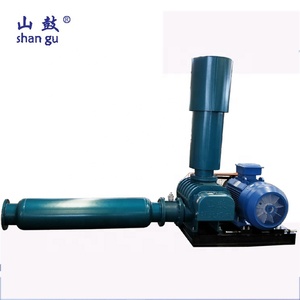
Dry granulated sugar (beet or cane sucrose) is pneumatically conveyed into high-shear stainless steel dissolvers via specialized Roots Blowers. The sucrose is blended with softened demineralized water at 75°C to achieve a uniform 65-70° Brix liquor, followed by pressure leaf filtration to remove micro-particulates.
Hydrolysis occurs either via continuous acid catalysis (Food-grade $\text{HCl}$ or $\text{H}_2\text{SO}_4$ at pH 1.8-2.2 at 80°C) or immobilized invertase enzyme beds (pH 4.5-5.0 at 55°C). Precise temperature control prevents the formation of undesirable Hydroxymethylfurfural (HMF), keeping HMF levels strictly under 20 mg/kg.
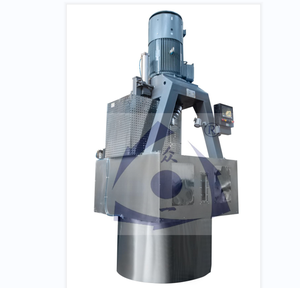
In acid-catalyzed systems, sodium carbonate ($\text{Na}_2\text{CO}_3$) neutralizes the stream. The liquid syrup passes through granular activated carbon (GAC) columns and sanitary SS304/SS316L High-Speed Centrifuges to clarify color bodies, ash content, and residual suspended solids down to <15 ICUMSA units.
The purified invert syrup enters multi-effect falling film evaporators operating under vacuum to elevate concentration from 65° Brix to a shelf-stable 72-77° Brix. Rapid flash cooling to <30°C in plate heat exchangers stops further thermal degradation and locks in sensory clarity.
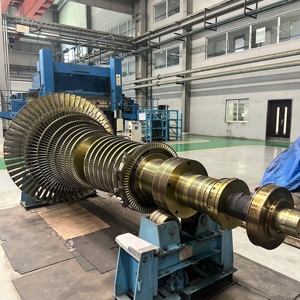
Heavy energy consumers—such as continuous sugar boilers and evaporators—are powered via co-located 1MW to 5MW Steam Turbine Generators. Utilizing agricultural biomass or bagasse, sugar plants in Central Europe achieve self-sufficient electricity generation and process steam supply.
From heritage confectionery craftsmanship in Budapest to large-scale beverage bottling facilities along the Danube, invert sugar provides tailored functional benefits.
Hungary’s famed marzipan (e.g., Szamos traditions), fondants, soft-centered pralines, and packaged pastries require invert sugar to prevent sucrose recrystalization during storage. The humectant property keeps baked goods moist, extending shelf-life across CEE retail distribution networks without artificial preservatives.
In carbonated soft drinks, energy drinks, and fruit nectar processing, fully liquid invert sugar eliminates the energy-intensive dissolving stage at the bottling plant. Additionally, commercial spirit distilleries utilize high-purity invert syrups to optimize mash fermentability in premium European spirits and Pálinka production.
Hungarian beekeeping (Méhészet) represents a vital agricultural sector. Acid-free enzymatic invert sugar syrup—with controlled fructose-to-glucose ratios and ultra-low HMF (<15 ppm)—serves as the gold standard winter feed for honeybees, preventing gut nosema and mid-winter feed crystallization inside hives.
Invert sugar factories operating in Hungary must strictly adhere to the Magyar Élelmiszerkönyv (Hungarian Food Code) alongside European Food Safety Authority (EFSA) directives. Key compliance benchmarks include:
With Hungary's Public Health Product Tax (NETA / Népegészségügyi Termékadó) impacting high-sugar consumer packaged goods, manufacturers are leveraging high-sweetness total invert syrups (1.3x sucrose sweetness) to reduce overall sugar volume by 15-20% while maintaining identical sweetness profiles, significantly mitigating tax liabilities.
Simultaneously, plants are integrating high-efficiency bagasse/biomass steam turbines and closed-loop condensate recovery systems to reduce thermal emissions in line with the EU Green Deal 2030 objectives.
Combining advanced metallurgical manufacturing with complete bulk ingredient process knowledge to deliver turnkey industrial solutions.
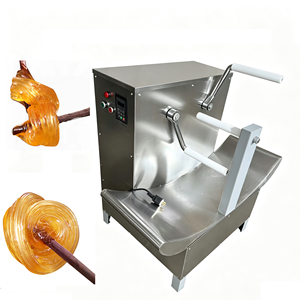
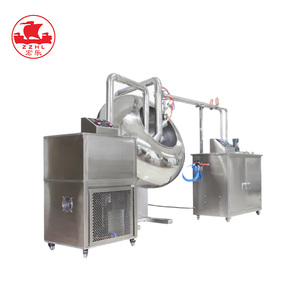
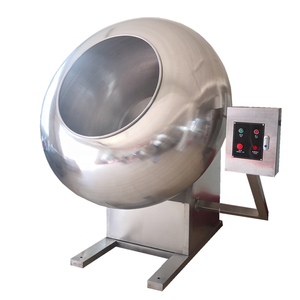
Our separators, continuous sugar centrifuges, and sugar coating turbines are constructed from certified SS304 / SS316L stainless steel with electropolished surface finishes (<0.4 µm Ra). All electrical drives and control panels meet stringent ATEX Zone 22 dust-explosion safety standard requirements for sugar mills.
Every equipment assembly and processing plant component undergoes rigorous Non-Destructive Testing (NDT) and pressure testing. Equipment delivered to Hungarian plants comes complete with full CE marking, ISO 9001 certification, material traceability certificates (EN 10204 3.1), and comprehensive installation qualification (IQ/OQ) protocols.
From custom CAD line layout design to equipment procurement, ocean freight clearance, and local installation supervision in Hungary, our engineering team manages the complete project lifecycle. We maintain local spare parts stock and technical dispatch services to guarantee zero unscheduled mill downtime.
Direct technical, operational, and regulatory answers regarding invert sugar factory machinery and bulk syrup production lines.
Our industrial sugar centrifuges are manufactured in standard processing capacities ranging from 501 L/h to over 10,000 L/h. For large-scale refineries in Hungary, multiple units are arranged in parallel banks to accommodate variable Brix throughput during peak seasonal sugar beet harvesting.
Acid hydrolysis (using hydrochloric or citric acid) provides high throughput speed and lower initial capital cost, making it ideal for standard industrial medium invert syrups. Enzymatic inversion (using invertase) operates at milder temperatures and neutral pH, producing premium invert sugar with near-zero HMF (<5 ppm), preferred for apiculture bee feed and high-end organic confectioneries.
Sugar processing is thermally intensive. Installing a 1MW to 5MW Steam Turbine Generator allows factories to utilize high-pressure steam generated from bagasse or biomass boilers for electrical power generation, while expanding exhaust steam (0.2–0.5 MPa) is routed directly to the vacuum evaporators and inversion reaction kettles, achieving co-generation thermal efficiency exceeding 82%.
Bulk invert sugar syrup is typically dispatched in 275-gallon (1,000L) heated IBC totes, 55-gallon (200L) steel/HDPE drums, or temperature-controlled 25-tonne food-grade stainless steel tanker trailers equipped with sterile air breathing valves and CIP wash fittings.
Sucrose has a maximum ambient solubility limit of 67° Brix. When inverted into a 50:50 mixture of glucose and fructose, the chemical diversity disrupts molecular crystal lattice formation. This allows stable syrup storage up to 75° Brix at ambient temperatures without precipitation.
Under Magyar Élelmiszerkönyv and EU regulations, all product-contact surfaces in syrup tanks, centrifuges, pumps, and pipework must be fabricated from AISI 304 or AISI 316L stainless steel, fully passivated and free of dead legs to ensure effective Clean-In-Place (CIP) sanitation.
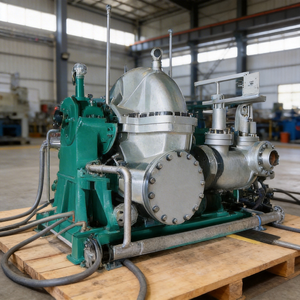
Roots Blowers provide high-volume, low-pressure pneumatic pulse-free air transfer to convey dry crystalline sugar from bulk storage silos to dissolving tanks without thermal melting or mechanical degradation of the sugar crystal grain size.
HMF forms when fructose degrades under excessive heat and acid conditions. Our processing equipment incorporates automated PLC-controlled continuous flow reactors with precision temperature loops, ensuring syrup exposure at peak temperatures is limited to minutes before immediate flash cooling.
Yes. We specialize in retrofitting legacy brownfield sugar mills and biorefineries across Central Europe. Our engineering team conducts 3D laser scanning to integrate modern centrifuges, automated coating turbines, and steam co-generation units into existing plant footprints.
Standard SS304/316L high-speed continuous centrifuges are manufactured and bench-tested within 6 to 8 weeks. Site delivery to Hungary, positioning, piping integration, and FAT/SAT commissioning typically require an additional 2 to 3 weeks.
Whether you require individual replacement centrifuges, Roots blowers, coating turbines, steam generators, or a complete turnkey invert syrup processing plant specification—our engineering team is ready to assist.
Get Catalog & Technical Consultation