Directly supplying Bulgarian food processing units, bakeries, breweries, and pharmaceutical plants with premium Chinese corn-derived maltodextrin and heavy-duty sugar industrial equipment.




As the European Union continues to tighten food safety criteria while consumer demand for functional, reduced-sugar, and clean-label products accelerates across South-Eastern Europe, Bulgarian food manufacturers face a dual challenge: optimizing formula costs while securing resilient, high-purity ingredient supply chains. Maltodextrin (C6H12O6)n—a nonsweet, nutritive saccharide polymer produced by controlled enzymatic hydrolysis of yellow corn, wheat, or tapioca starch—serves as a fundamental technological backbone across modern food technology.
Chinese corn processing facilities, equipped with world-leading continuous jet-cooking and multi-stage enzymatic conversion lines, currently supply over 60% of the world's commercial food-grade maltodextrin. For procurement officers in Sofia, Plovdiv, Varna, and Veliko Tarnovo, working directly with primary Chinese manufacturers provides unprecedented access to custom Dextrose Equivalent (DE) specifications, consistent bulk density, and integrated machinery support that Western European distributors routinely mark up by 35% to 50%.
The functionality of maltodextrin in food systems is strictly governed by its Degree of Hydrolysis, quantified as Dextrose Equivalent (DE). DE represents the percentage of reducing sugars present in the product relative to pure dextrose (glucose) set at 100. Commercial maltodextrin ranges from DE 10 to DE 20. Once the DE exceeds 20, the product chemically transitions into glucose syrup solids.
| DE Grade | Molecular Weight Range | Solubility & Viscosity Characteristics | Primary Industrial Applications in Bulgaria |
|---|---|---|---|
| DE 10 - DE 12 | High Molecular Weight (Long Chains) | Low sweetness, high viscosity, superior film-forming ability, high hygroscopicity control. | Flavor encapsulation, fat replacers in dairy, carrier for active botanical extracts, spray drying aid. |
| DE 15 - DE 17 | Medium Molecular Weight | Moderate solubility, neutral mouthfeel, excellent binder, minimal browning (Maillard reaction). | Processed meats (Lukanka/Sujuk), bakery glazes, infant nutrition, instant soup powders. |
| DE 18 - DE 20 | Lower Molecular Weight (Shorter Chains) | Higher solubility, subtle sweetness, rapid dispersion in cold liquids, quick carbohydrate absorption. | Sports nutrition drink mixes, confectionery pan-coating, beverage stabilization, sauce thickening. |
In low-fat dairy products (such as traditional Bulgarian Kiselo Mlyako formulations and spreadable cheeses), maltodextrin creates a smooth, creamy texture by mimicking fat globule lubricity without imparting off-flavors or unwanted sweetness.
Maltodextrin depresses the freezing point less than monosaccharides and disaccharides. In frozen desserts and prepared cold meals, DE 10-15 maintains structural integrity and prevents ice crystal formation during transport across regional Cold Chains.
With high glass transition temperature (Tg) properties, maltodextrin acts as an ideal protective matrix for spray-drying essential oils, natural paprika extracts, and heat-sensitive aroma compounds widely used in Bulgarian meat seasonings.
Bulgaria’s strategic position as a agricultural and food processing hub in the Balkan Peninsula makes it a major producer of confectionery, wine, dairy, cured meats, and canned fruit preserves. Here is how leading producers in key Bulgarian industrial zones apply food-grade maltodextrin and integrated machinery:
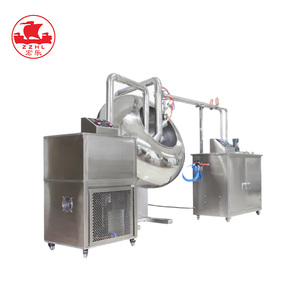
Bulgaria’s vibrant confectionery market relies heavily on DE 15-20 maltodextrin to regulate sugar crystallization in soft candies, gummies, and chocolate coatings. When used in conjunction with Industrial Sugar Chocolate Coating Turbines, maltodextrin forms a crystal-clear, non-sticky protective glaze that seals moisture inside the core, preventing bloom on chocolate shells during warm summer months in Varna and Burgas.
In iconic Bulgarian meat products such as Lukanka, Sujuk, and Elena Fillet, DE 12-17 maltodextrin serves a double function. First, it acts as a carrier for starter cultures and curing spices, guaranteeing homogeneous distribution throughout the meat block. Second, its controlled digestibility profile provides a slow-release carbohydrate source for lactic acid bacteria, ensuring smooth pH reduction without creating rapid, sharp acidity or premature surface drying.
Bulgaria is world-famous for its fermented dairy products. In milk powder, infant formula blends, and processed yogurt drinks, white maltodextrin powder provides non-sweet caloric density while balancing dry matter percentage. Its immediate cold-water solubility ensures complete dissolution without lumping, passing strict European Food Safety Authority (EFSA) particle dispersion tests.
From instant coffee-mixes produced in Gabrovo to specialized craft beers brewed in Ruse, maltodextrin provides non-fermentable body and mouthfeel. In brewing, adding DE 10 maltodextrin increases the beer’s final gravity and foam head retention without altering the alcohol content (ABV) or hop aroma profile.
Unlike raw ingredient brokers, our factory ecosystem provides complete industrial plant engineering. When processing native starches into maltodextrin or incorporating sweetener blends into large-scale production, process stability depends on high-performance mechanical equipment:
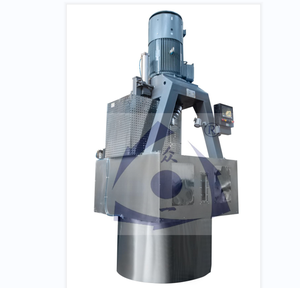
Our Sugar Industry High-Speed Centrifuges (501-1000L/h SS304/316L) clean starch slurries and eliminate insoluble proteins prior to enzymatic jet-cooking. This step ensures that the resulting maltodextrin achieves a sparkling clear solution with zero turbidity.
Moving bulk maltodextrin from spray-drying towers to storage silos or packaging lines requires sanitary, oil-free air. Our Sugar Plant Roots Blowers deliver continuous positive pressure for dense-phase conveying, protecting powder particles from degradation.
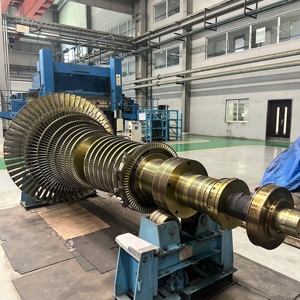
Large-scale starch hydrolysis demands massive thermal energy. Integrating our 1MW - 5MW Steam Turbine Generators allows sugar mills and starch processing facilities to run CHP (Combined Heat and Power) plants, cutting factory electricity costs by up to 40%.
Navigating the import of food ingredients into Bulgaria requires strict adherence to both national Bulgarian Food Safety Agency (BFSA / БАБХ) directives and European Commission regulations. Sourcing from our certified Chinese manufacturing bases provides complete assurance:
We streamline the supply chain from China’s premier maritime hubs (Qingdao, Tianjin, Ningbo) directly to the Black Sea ports of Bulgaria:
| Port of Origin (China) | Destination Port (Bulgaria) | Average Sea Transit | Customs Documentation Provided |
|---|---|---|---|
| Qingdao Port / Tianjin Port | Port of Varna (Varna West / East) | 18 - 24 Days | Bill of Lading, COA, Non-GMO Cert, Phytosanitary Cert, Invoice, Packing List, EU Health Cert. |
| Shanghai / Ningbo Port | Port of Burgas | 20 - 26 Days | Full Customs Clearance Pack, Certificate of Origin (Form A/EUR.1 support), Heavy Metals Analysis. |
Flexible packaging formats include 25kg multi-wall paper bags with PE inner liners, 500kg jumbo supersacks, and customized private-label packaging for regional ingredient distributors in Eastern Europe.
By bypassing European brokers, our clients secure direct ex-factory pricing with fixed annual contracts, protecting Bulgarian food producers against global market volatility.
Every shipment is verified using HPLC, atomic absorption spectroscopy, and micro-biological plating, ensuring 100% compliance with strict EU batch specs.
Whether you require low-density agglomerated maltodextrin for instant drinks or high-density DE 10 powder for tableting, our R&D center adjusts hydrolysis and drying conditions to match your exact process needs.
Connect directly with our senior ingredient specialists and engineering team. Get custom DE formulation advice, FOB/CIF quote comparisons to Port of Varna, and free laboratory testing samples for your factory.